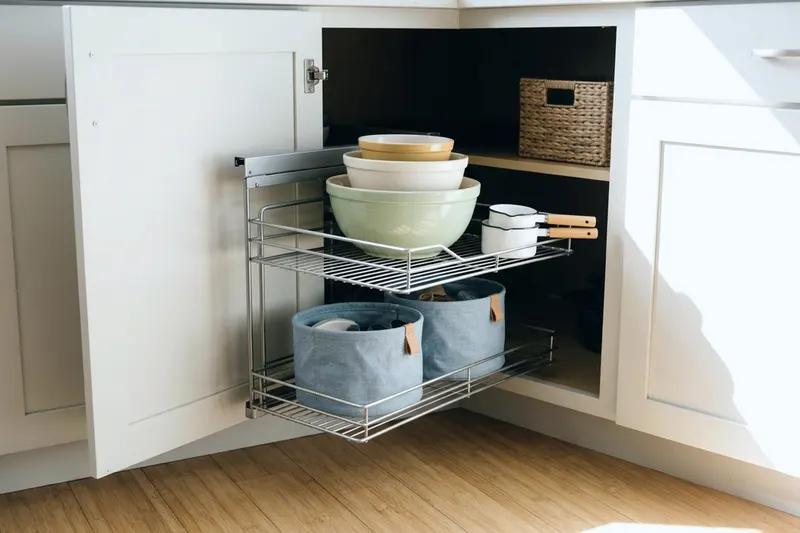
A cluttered bathroom vanity slows down your morning routine, but a simple bathroom cabinet organizer strategy puts everything right at your fingertips.
7 steps to a bathroom cabinet you can see into
Written up by Margo Lockridge
7 minutes to read

A bathroom cabinet packed with bottles and half-empty tubes makes getting ready a chore. Emptying the space and grouping your supplies turns a dark cavern into a clear setup. Sorting items by how often you use them puts your daily essentials right where you need them. A dedicated bathroom cabinet organizer keeps everything visible.
1. Empty the cabinet and wipe the shelves dry
Take every single item out of the vanity or wall cabinet and set it on the floor. A completely bare space shows you exactly how much room you have to work with. Throw away empty cardboard packaging and broken hair clips that just take up valuable real estate.
Spray the bare shelves with a gentle all-purpose cleaner. Let the spray sit briefly, as the cleaner's label directs, to loosen sticky toothpaste rings, leaked shampoo and hardened soap residue. Wipe the shelves clean with a damp cloth, scrubbing gently at the corners where dust and powder tend to collect.
Use a dry microfiber cloth to pick up the remaining moisture. A completely dry surface ensures your new bins sit flat and keeps damp dirt from transferring to the bottom of clean bottles. If your wooden shelves look worn, you can lay down a non-slip shelf liner cut to fit the exact width and depth of the space.
2. Toss expired and unused medicines and products the safe way
Old pills, expired cough syrups and separated lotions crowd the shelves and get in the way of the items you actually use. Look at the printed dates on your prescription bottles and over-the-counter pain relievers. The FDA says to mix unused medicine with something unappealing such as dirt, cat litter or used coffee grounds, and not to crush pills.
The FDA says to put that mixture in a sealed plastic bag before throwing it in the trash, and to scratch out personal information on the empty packaging. If you prefer to drop old prescriptions off, the FDA points people to the DEA web page to find a medicine take back location by ZIP code.
Check your skincare jars and sunscreen tubes for an expiration date or an open lid icon, and follow the label for how long the product lasts after opening. Throw away anything that smells bad or separates into liquid and clumps, and check the label if you are unsure.
3. Sort what is left into daily, weekly and backup groups
Group your remaining bottles and jars into three distinct piles based strictly on how often you reach for them. Put toothpaste, deodorant, face wash, contact solution and daily moisturizers into the first pile. These are the items you touch every single morning and evening.
Keeping them separate makes sure they get the best placement in the cabinet. If you are clearing a bathroom counter covered in bottles, limit the surface to hand soap and move the rest into these organized piles.
Place your weekly face masks, deep hair conditioners and self tanners into a second pile. These things matter, but they do not need to sit right at the front of the shelf taking up prime space.
Put heavy backup supplies like a large bottle of mouthwash or a bulky pack of toilet paper into the third pile. Storing backups out of the way leaves breathing room for the items you need right away. Keep travel sized bottles in their own small bag, separate from your home supplies.
4. Put the daily items at eye level and in front
Your daily essentials belong on the shelf that sits closest to your natural line of sight. For a standard medicine cabinet, use the bottom or middle shelf so you can grab your face wash without stretching your arms up. If you are organizing a lower bathroom vanity, place the daily items right at the front of the top shelf.
Stand the tallest bottles in the back of this daily zone and arrange the shorter items in the front. You want to see the label of every daily product at a single glance without moving things around. Keep the spacing loose so you can pull out a tube of toothpaste without knocking over a fragile glass bottle.
Store your second pile of weekly treatments on the highest shelf or tuck them toward the back of the vanity. Move your third pile of heavy backup supplies to the lowest, deepest corners of the cabinet. Grouping backups together makes it easy to check your inventory before heading to the store.
5. Add a stackable bin or a turntable for lotions and bottles
A clear plastic turntable works perfectly as a bathroom cabinet organizer for tall, narrow bottles that tend to tip over easily. Spin the turntable to reach a heavy bottle of lotion at the back without disturbing the delicate rows in front. Choose a small turntable for a standard upper cabinet or a wide version for a deep lower vanity space.
For smaller items like razor blades and dental floss, use clear acrylic stackable bins. A narrow bin holds many small boxes and keeps them from scattering across a wide shelf. Stack a bin of backup soap bars directly under a bin of daily cotton rounds to double your vertical storage space.
Label the front of each bin with a simple piece of masking tape and a black marker. Clear labels stop family members from dropping random items into the wrong container. If you have a wide vanity drawer, use modular acrylic dividers to create separate compartments for makeup brushes and combs.
6. Use the inside of the door for small flat items
The back of the cabinet door holds plenty of small grooming tools that normally get lost in a dark drawer. Stick a few clear adhesive hooks near the top of the door to hang hair ties, headbands or lightweight necklaces. Space the hooks apart so the items hang flat against the wood and do not tangle.
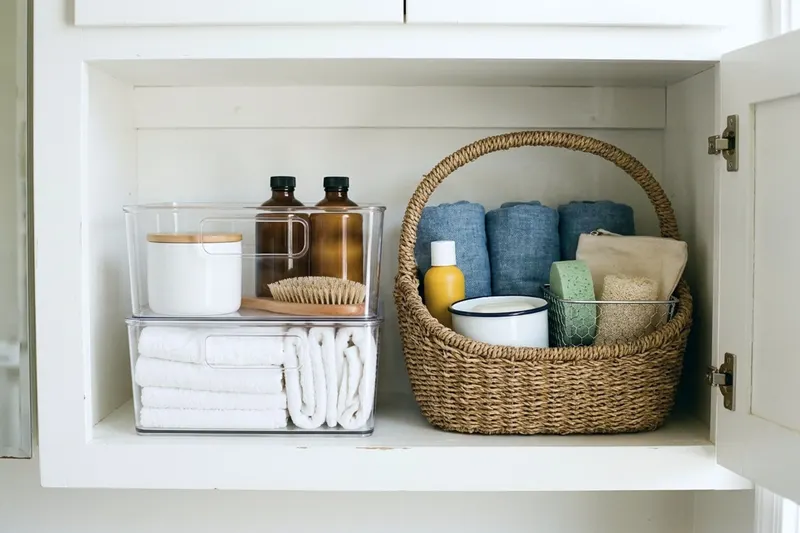
You can also attach a slim acrylic caddy to the lower half of the door using heavy-duty adhesive strips. A shallow caddy easily holds nail clippers, tweezers and small scissors. Make sure the caddy sits exactly between the interior shelves when the door closes so the cabinet shuts tightly.
If your cabinet door is metal, use magnetic hooks and small magnetic cups to hold lightweight items. Keep anything heavy off the door to prevent the hinges from sagging over time.
7. Check it again every few months so it stays clear
A well-planned bathroom cabinet stays organized longer, but small items inevitably drift out of place during a rushed morning. Spend a little time resetting the shelves when the seasons change. Pull out the empty tubes that made their way to the back and wipe up any new shampoo spills before they harden.
Move your heavy winter moisturizers to the back in the spring and bring your summer sunscreen to the front. Realigning your daily products keeps a new wall of clutter from building up. If you spot a product you have not used in a long while, consider throwing it away.
Keep a small trash can right next to the vanity to catch empty packaging immediately. When throwing things away is easy, empty boxes stop piling up on the cabinet shelves.
How to measure for a new organizer
Buying the wrong size bin leaves dead space on the shelf or stops the cabinet door from closing. Measure the depth of your cabinet from the back wall to the inside edge of the door hinge. Wall cabinets are usually shallow, while lower vanities run much deeper.
Measure the height between the shelves to ensure a tall bottle of hairspray fits inside a new bin. Subtract a small amount from your total height measurement so you have enough clearance to slide bins in and out smoothly. Write these exact measurements down on your phone before you shop for containers.
If you have plumbing pipes in the middle of your lower vanity, borrow tricks to organize around the pipes under your kitchen sink. Buy U-shaped acrylic drawers that wrap around the plumbing to claim the empty space in the middle.
Picking the right material for bathroom storage
Bathrooms generate a lot of heat and steam, which ruins certain storage materials quickly. Avoid soft fabric bins or untreated wicker baskets that absorb moisture and grow mold. Cardboard boxes can warp in a damp environment.
Clear acrylic and hard plastic make the best containers for a damp bathroom cabinet. Plastic bins wipe clean with a damp cloth and will not warp from hot shower steam. Clear sides also let you see exactly how many cotton swabs or razor blades you have left without opening a lid.
If you prefer a solid material, choose rustproof stainless steel or coated wire baskets. Wire baskets offer great ventilation for damp items like extra washcloths or cleaning sponges. Avoid cheap metal organizers that can rust and leave orange marks on your white cabinet shelves.