Find the right corner cabinet pullout to bring pots and pans into easy reach so you stop losing kitchen gear in the dark dead space at the back.
How to reach the back of a blind corner cabinet
Written up by Margo Lockridge
5 minutes to read
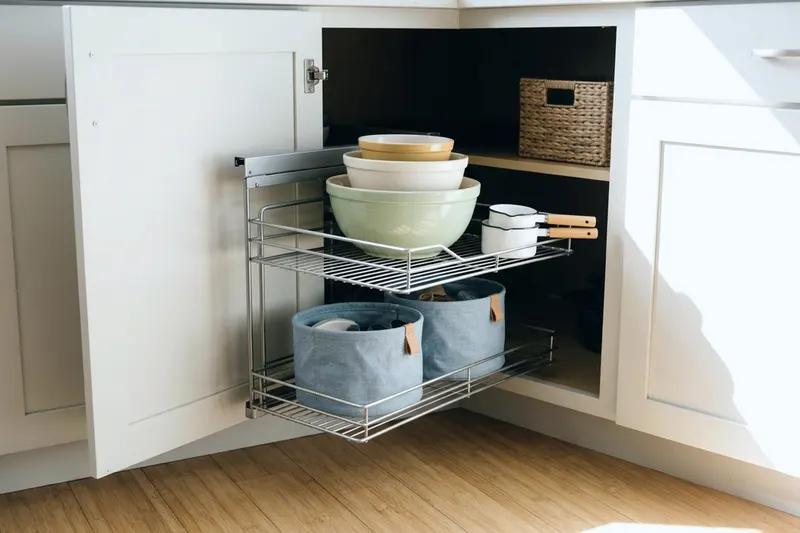
A corner cabinet pullout slides heavy pots out of the dark dead space. Finding the right insert means checking your cabinet shape and measuring the dimensions. You then match your exact door opening to a manufacturer's minimum clearance specifications.
Tell a blind corner from an L-shaped corner cabinet
An L-shaped cabinet has two doors joined at a right angle that fold open together. A blind corner cabinet runs straight along the wall with a single standard door. Much of the shelf space hides behind the adjoining cabinet face. This setup forces you to reach blindly into the dark to find a roasting pan.
Knowing your cabinet shape determines the specific metal hardware you can install. A pullout only works when the sliding tracks clear the frame without hitting the opposite side. An L-shaped corner cabinet requires internal hardware that spins on a tall center pole. A blind corner needs hardware that slides along a track or swings on a pivoting hinge.
Measure the door opening, the depth and the hinge side
Pull-out inserts and swing trays require exact clearances to slide past the door frame. Grab a tape measure and a piece of paper to record the inside dimensions. Note these four measurements before you start shopping for a heavy-duty sliding organizer.
- Measure the clear width of the door opening from the inside edges of the frame.
- Measure the depth from the front face frame to the back wall of the cabinet.
- Measure the total inside width by reaching your tape measure all the way into the blind space.
- Check which side holds the hinges, because you must order most organizers to swing either left or right.
A small overhang of wood can stop a metal basket from sliding outward. Check the specification sheet of the exact unit you buy for its minimum clearances. You must also account for any plumbing pipes or electrical boxes mounted against the back wall. These obstructions reduce your usable cabinet depth and block sliding tracks.
Kidney lazy Susans for L-shaped corners
L-shaped corners suit a kidney shaped lazy Susan with a notch cut out for the folding doors. The rotating shelves sit on a center pole that screws into the cabinet interior. You push the shelf gently, and the back items spin to the front for easy lifting. The front notch aligns with the door opening so the doors close flat against the frame.
One maker's installation sheet gives minimum cabinet sizes for a 32-inch kidney lazy Susan. You need 21 inches along each side and 12 inches across each front face. Other makers use different dimensions, so check the specification sheet for the exact unit you buy.
Half moon and swing out trays for blind corners with a wide door
Blind corner cabinets with a wide single door can hold half moon shelves or swing out trays. You open the cabinet door and pull the heavy tray out in a wide arc. The curved shelf brings your mixing bowls out of the dark space and past the door frame. The motion brings the back contents out to you.
One maker's installation sheet for a swing out blind corner organizer has a requirement for face frame cabinets. A face frame cabinet needs a wooden filler on the side wall that is at least 10 inches deep. This filler sits flush with the opening so the hardware clears the cabinet frame as it pivots out. Always check the specification sheet to see how wide your opening must be to clear the hinge.
Pull outs that slide the back shelves forward into reach
A blind corner cabinet pullout uses a sliding frame to bring the front baskets outside. This mechanism pulls the hidden back baskets over to the door for easy access. You then slide those back baskets straight out into the kitchen space. Multiple metal tracks must clear the cabinet lip without catching on the door hinges.
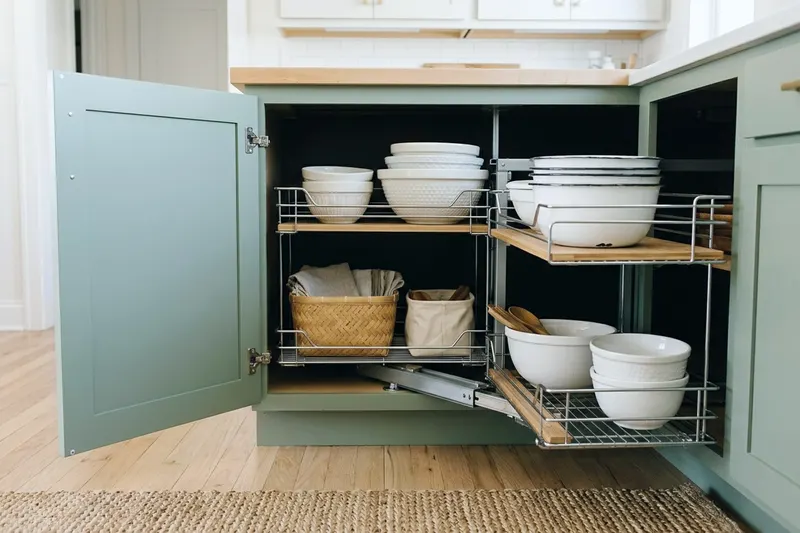
One maker's installation sheet for a blind corner pullout lists a minimum cabinet opening of 15 inches. The unit requires a minimum cabinet depth of 19 inches and a minimum cabinet width of 31.5 inches. One maker recommends placing its blind corner pullout at least 2.5 inches from the side of the cabinet and 2.75 inches from the front edge.
What to keep in the dead space if nothing will fit
Some cabinets have an opening too narrow for any metal pullout to clear the wooden frame. If no organizer fits, use the back corner for lightweight and bulky items you use once a year. Push your holiday baking tins and large plastic coolers deep into the blind space.
Keep everyday pots near the door so you never drag heavy cast iron out from the back. Storing small items in the back corner leads to missing lids and expired boxed goods. Place your loose items in long plastic bins so you can pull the whole container out at once. Never empty a jammed junk drawer into the dead space, which just moves the mess out of reach.
If you need more daily storage, look for pantry shelving ideas to hold your dry goods. Reserve the accessible cabinet door area for your main pots and heavy frying pans. You can also organize under the kitchen sink to free up more space.
When to fit it yourself and when to call a cabinetmaker
Fitting a blind corner pullout requires a tape measure and strict attention to the paper templates. One maker's sheet lists a Phillips screwdriver, a drill and a tape measure as the tools needed. Always check the weight rating on your hardware before loading the shelves with heavy cast iron pots. Anchor the tracks securely to the solid wood of the cabinet floor so the unit stays stable, following the maker’s sheet for the screws and the weight rating.
Call a professional cabinetmaker if your kitchen has fixed center stiles that completely block the door opening. You should also hire help if your wooden cabinet base shows signs of old water damage. Soft and damaged wood prevents the mounting screws from holding the heavy sliding tracks firmly. A cabinetmaker can tell you whether the frame can be modified to fit a unit.


