Fix a kitchen junk drawer that jams shut by emptying the space, sorting out hazards, and organizing drawers with fitted trays that stop the sliding.
A junk drawer that will not close and how to sort it
Written up by Margo Lockridge
5 minutes to read

Fix a kitchen junk drawer that jams shut by emptying the contents onto a towel. Toss the clear trash and move out the stray tools. Keep a few daily items, and finish by fitting edge-to-edge trays.
Empty the whole drawer onto a towel
Pull the drawer open as far as the tracks allow. Release the drawer as the maker's directions describe, then lift it out and set it down flat.
Spread a thick bath towel across your kitchen table. Dump the entire drawer contents directly onto the towel fabric. The thick fabric stops heavy tools from rolling off the table edges.
Wipe the empty drawer out with a damp rag. Pick up the loose dust and dried food crumbs from the back corners. Dry the inside wood panels fully with a dry paper towel.
Wipe the cabinet frame above the opening and the wood sides where the glides slide.
Sort the pile into toss, move and keep
Throw away dried pens, expired coupons, and broken rubber bands. Toss out the small pieces of loose trash you find among the tools.
Pull out items that belong in a different room entirely. Move rogue screwdrivers to your main garage toolbox. Keep only the small tools you use in the kitchen.
Gather stray cables to deal with a drawer full of old cords and chargers separately. Take large spatulas to a kitchen utensil drawer that jams when it opens. Pile old bills aside to stop mail piling up on the counter later.
Drop loose screws into a labeled bag and store it with your household tools. Group rubber bands into one pile.
Secure loose batteries to prevent a fire
Loose batteries rolling around the drawer can pose a fire hazard. The National Park Service advises storing 9-volt batteries upright, in their original packaging or with the posts covered in electrical or duct tape.
Keys, paper clips or other metal touching both posts can cause a short circuit and a fire. The EPA says batteries can have enough energy to injure someone or start a fire even when they are used up and appear to be discharged.
The EPA warns that button cell and coin batteries can be a swallowing hazard and should be stored out of the reach of young children. Store button and coin batteries out of the reach of young children, not in a low kitchen drawer.
Decide what earns a spot in the drawer
The junk drawer holds small items you need fast access to during the day. Keep a single pen, a small notepad, and a sharp pair of scissors. Limit the space to things you reach for constantly.
Leave a tape measure and a small flashlight near the front panel. Put spare light bulbs away in a hall closet. Move bulk boxes of staples to a home office desk.
Clear out any bulky items that catch on the wood frame above the drawer. The drawer needs empty air space above the tools to slide open smoothly. The contents must sit flat below the top rim of the drawer box.
Check the height of thicker items like flashlights to ensure they clear the cabinet face. Remove duplicate items that take up valuable storage real estate. Place the extras in a designated office supply box in a different room.
Measure the empty space before buying trays
Grab a steel tape measure and check the inside width of the empty drawer. Measure the depth from the front interior wall to the back interior wall. Measure the height from the bottom panel up to the top rim.
Write these three exact numbers down on your notepad. The height dictates exactly how tall your modular plastic trays can be. You need trays that sit slightly lower than the side walls.
Trays must clear the upper cabinet frame when they slide shut. Account for internal screw heads holding the drawer handle in place. Measure the narrowest point if the drawer sides taper inward at the bottom.
Take your notepad measurements to the store when buying supplies. A firm set of numbers prevents you from bringing home organizers that wedge against the frame. Exact dimensions make a clean fit more likely.
Fit small trays edge to edge
Buy separate plastic or wood trays instead of one large molded block. Separate rectangular trays let you puzzle out a custom layout for your specific tools. Pack the trays edge to edge across the entire interior width.
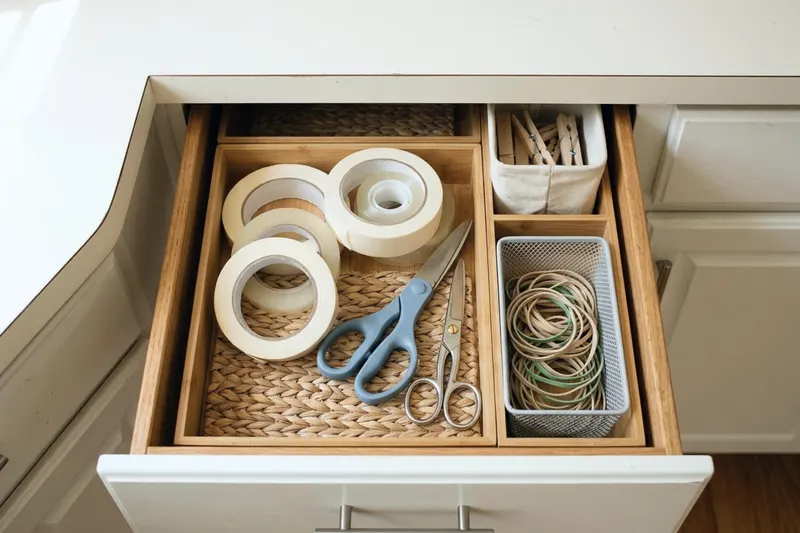
Push the containers from the front panel to the very back wall. A tight fit stops the containers from sliding back and forth when the drawer opens. Place a long tray along one side for your kitchen scissors and tape measure.
Fill the remaining space with small square trays for loose items like paper clips. Keep similar items together in their own designated compartments. Leave no empty gaps between the modular trays.
The entire floor of the drawer should hold an organizer bin. Try different configurations until every container locks firmly into place. Block any leftover gaps at the back with a spare block of wood so the trays stay rigid.
Clear the space out when it starts sticking
Small pieces of paper will eventually migrate back into the open compartments. Notice when the drawer front resists opening or sliding closed. Empty the specific trays out the moment you feel anything catch on the frame.
Pull out the rogue items and toss the obvious trash immediately. Put the stray store receipts into your paper recycling bin. Return the few core tools to their assigned square trays.
Wipe out any sticky dust from the bottom of the plastic bins. A fast manual sort stops the clutter from building up again. Keep the tools lying flat so the drawer glides outward without catching.
Set aside a brief moment each month to check the bins for newly deposited junk. Maintain the single layer of items by refusing to stack new tools on top. Dry the washed bin completely before placing it back into the drawer grid.


