Fix a jammed utensil drawer with a proper kitchen drawer organizer setup that cuts duplicates, lays spatulas flat and adds strong internal dividers.
6 fixes for a kitchen utensil drawer that jams when it opens
Written up by Margo Lockridge
5 minutes to read

A jammed utensil drawer slows meal prep until you yank it open and scatter the tools inside. You can stop the catch by pulling the tall tools out, cutting duplicates and fitting a kitchen drawer organizer that keeps the rest flat.
1. Find the tool that catches and cut your duplicates
Open the jammed drawer slowly and look for the exact tool that wedges against the upper frame. A curved soup ladle, a thick potato masher or a wire whisk usually creates the block. Pull that problem tool out right away so the drawer tracks glide freely again. Wiping away the crumbs at the bottom gives you a clean surface to start sorting.
You likely own several identical spatulas and tongs that tangle together. Sort the utensils by type and pick the single best version of each. Keep the sturdy silicone spatula and set aside the flimsy plastic ones with melted edges. Place the extra serving spoons in a donation box to clear massive amounts of physical space.
2. Split tools by job into the nearest drawers
Utensils pile up fast when you force baking, cooking and serving gear into a single narrow space. Group your tools by the daily tasks they perform to stop the frustrating search. Gather the measuring spoons and dough scrapers to move them near the mixing bowls. Place the pie servers and clean tongs in a separate area close to the dinner plates.
Dedicate your main drawer by the stove solely to the items you grab while standing at the hot burner. That drawer holds your favorite flipping spatula, a wooden stirring spoon and long cooking tongs. Moving the occasional tools away frees up crucial room in the main cooking zone. The reduced volume ensures the remaining everyday items rest perfectly flat on the bottom board.
3. Lay long tools flat with every handle facing forward
Tossing clean utensils into a drawer creates a tangled heap that binds against the sliding mechanism. Lay your wooden spoons, thin spatulas and meat forks flat against the bottom board. Point every handle toward the front of the drawer so you can grab the right tool instantly. Facing them all in one direction prevents the wide working ends from stacking up on top of each other.
Long tools tend to shift diagonally when you open and close the drawer in a hurry. Lining them up straight keeps the wide spatulas from wedging into the side walls.
4. Fit adjustable dividers the full depth of the drawer
Loose utensils drift sideways over time and wedge themselves tightly into the dark back corners. Install a kitchen drawer organizer system using adjustable dividers that span all the way from the front board to the back panel. Spring-loaded dividers lock tight against the walls to build firm narrow channels for your flat tools. These deep custom channels stop the long spatulas from twisting diagonal and blocking the track.
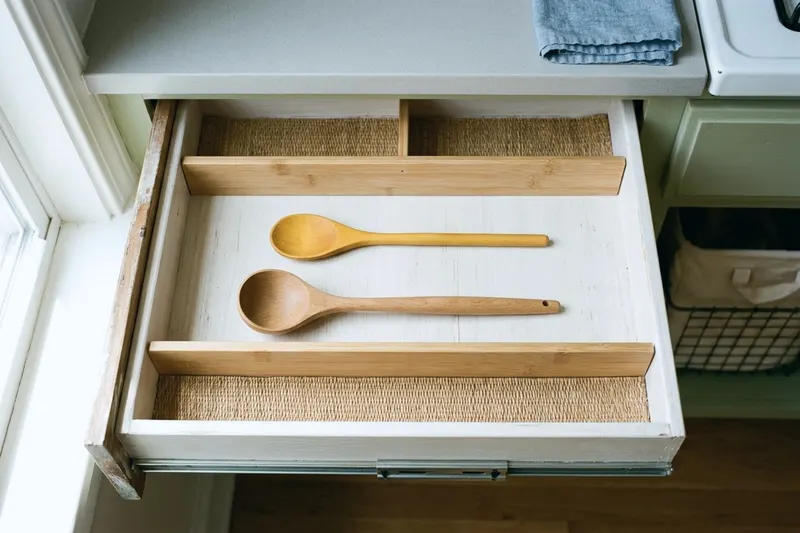
Custom channels keep categories separated so a stray fork never traps a wooden spoon. Set the dividers wide enough to let your hand reach in and grab a handle easily. Slide your sorted flat tools between the barriers to lock them into their permanent straight lines. Adding strong internal walls helps keep the collection from shifting when you close the drawer firmly.
5. Stand bulky tools in a crock by the stove instead
Most drawers lack the height to hold thick wire whisks, heavy meat mallets and deeply curved ladles. Take these bulky tools out of your drawer completely and stand them upright instead. Place a heavy ceramic crock on the counter near the stove, set back from the burners, where the open space easily accommodates them. Storing them upright keeps them ready for a rapid grab while you stir a boiling pot.
A tall container corrals the messy ends of long tools and prevents them from falling behind the stove. Pick a heavy stoneware crock with a wide base that resists tipping over when you pull out a thick ladle. Wash and dry the bulky tools thoroughly before dropping them handle first into the new container. Grouping the large items together on the counter turns a structural problem into a practical cooking station.
6. Give foil, wraps and bags a drawer of their own
Boxes of aluminum foil, plastic wrap and zip bags take up a lot of drawer room. Move these large square boxes into a separate lower drawer to stop them from crushing your delicate cooking tools. Giving wraps their own dedicated zone helps keep torn cardboard flaps from catching and jamming against the upper cabinet frame. A focused space for packaging also speeds up the nightly process of wrapping leftovers.
Stacking heavy boxes on top of flimsy spatulas can lead to broken handles and trapped items. Slide the aluminum foil and wax paper rolls side by side in a deep lower compartment. Keeping the food storage supplies completely separate protects your tools and streamlines your kitchen cleanup routine. Moving the wraps out should help your main utensil drawer slide more easily day to day.
Clear other tight spots in the kitchen
Finding extra space for stray utensils often means rearranging the rest of the surrounding cabinets. You can reach the back of a blind corner cabinet to store your holiday serving trays and large platters. Moving the rarely used items out of the prime zones clears immediate space for your daily tools. The reshuffle makes the entire kitchen operate more logically.
Heavy cleaning bottles and scrub brushes take up valuable room if you leave them on the main counters. Move the dish soap and spare sponges below to organize under the sink out of sight. A clear sink area leaves you plenty of counter space to wash and dry your newly sorted spatulas. Grouping the washing supplies together around the plumbing speeds up the final cleanup after a long meal.
Sometimes a kitchen drawer refuses to close because it became a dumping ground for household paperwork. A stack of envelopes and flyers wedges against the tracks just like a stray ladle. You can stop the paper pileup quickly and sort the daily mail before it ever reaches the kitchen. Redirecting the bills and letters to a proper desk keeps your cooking zones focused entirely on food prep.


