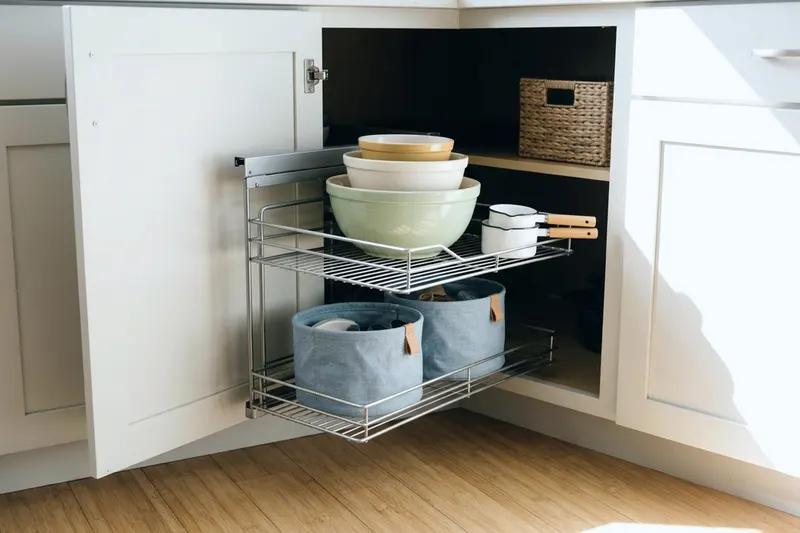
An under kitchen sink organizer helps you work around the pipes and garbage disposal while keeping everyday household cleaners safe from kids and pets.
How to organize under the kitchen sink around the pipes
Written up by Margo Lockridge
5 minutes to read

The cabinet under your sink fills up with half empty bottles, and the pipes eat the space that is left. An organizer that steps around the drain and disposal gives you back the floor. Safe storage for the cleaners matters just as much as the extra room.
Empty the cabinet and check the pipes for drips first
Look at the cabinet before you touch the plumbing. Stains, swollen wood and a musty smell can signal a slow leak that deserves attention first.
Pull every bottle, sponge and brush out and set them on the kitchen floor. You need a bare cabinet to see what space the plumbing really leaves you.
Shine a flashlight along the drain pipe, the trap and the bottom of the disposal. Feel the cabinet floor for damp or soft wood. If anything drips, call a plumber before you load the cabinet back up.
Wipe the floor and the inside of the doors with a damp cloth, then let the wood dry fully. Sort the pile while you wait.
Keep only the cleaners you use every week
Sort the pile into the things you grab all the time and the things you rarely touch. Dish soap, a surface spray and the dishwasher detergent usually earn a spot. Toss empty bottles and worn out sponges into the trash bag right away.
Move bulk refills and specialty cleaners to a closet shelf or the back of a blind corner cabinet. A cabinet holding fewer bottles is easier to reach into and easier to keep dry.
Group what is left by job, so the spray bottles sit together and the dishwasher supplies sit together.
Leave every cleaner in its original container
Matching bottles look tidy, but pouring cleaners into them is risky. The EPA advises always keeping household chemical products in their original containers. The label on the factory bottle usually carries the warnings and first aid steps.
The EPA warns never to move household chemical products into containers that could be mistaken for food or drink. A clear cleaner in an old water bottle looks like water to a child or a guest.
Set each bottle on its shelf with the label facing out. You can read the label at a glance, and nobody has to guess what is inside.
Lock the cabinet if young children live in or visit the home
The CPSC advises storing chemicals and cleaning supplies in a locked cabinet or box, out of the reach of children. A low sink cabinet is exactly where a toddler goes first.
The EPA recommends keeping cleaning products out of children's reach and putting childproof locks on low cabinets. Pick a latch that works on your style of door and install it before the cleaners go back in.
Test the lock by pulling on the door the way a curious child would. If the door opens, adjust the latch until it holds. Do this even if no children live with you, since visiting grandchildren and neighbors reach for low doors too.
Fit a two tier organizer that clears the drain and disposal
Check how the supply lines and the disposal power cord run before you buy anything. Your organizer has to sit clear of both, or it will pinch them every time you slide it.
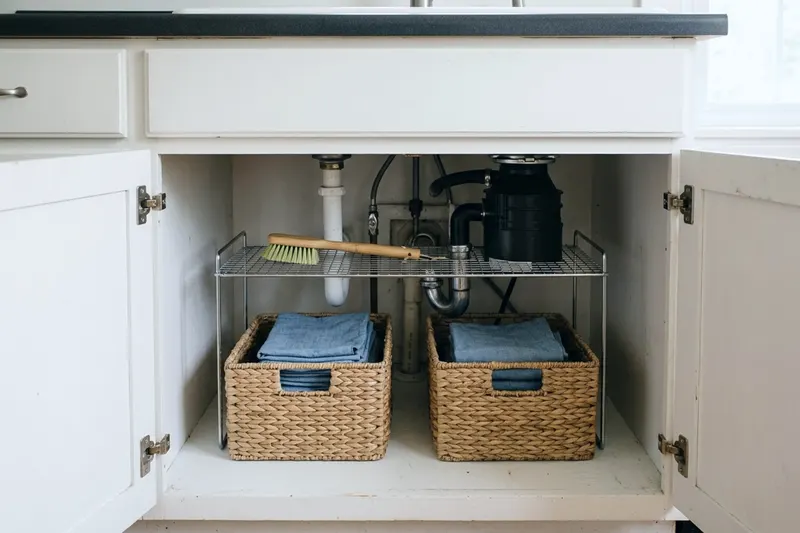
A plain box fails here because the trap and the disposal sit right in the middle of the space. Choose an organizer built in two tiers, with a cutout or a split design that straddles the plumbing.
Measure the width of the door opening, the depth to the back wall and the height from the floor to the lowest pipe. Bring those numbers with you when you shop so the unit clears the pipes without forcing it.
Put the heavy items, such as dishwasher detergent and tall bottles, on the lower tier. Keep brushes, sponges and small tubs on the upper tier where you can see them. Slide the unit in slowly and check that nothing rubs against a pipe or the disposal.
Hang spray bottles on a tension rod to free the floor
Tall bottles tip over every time you reach past them.
Spray bottles take up more floor than their contents deserve, so hang them by their triggers from a tension rod and open the floor for bigger items.
Measure the inside width of the cabinet and twist the rod until it presses tight between the side walls. Set it high enough that the hanging bottles clear the top tier of your organizer.
Hook each trigger over the rod so the bottles hang upright. Give the rod a firm tug before you trust it, and tighten it again if it slips over time.
Lay a drip tray or liner on the cabinet floor
Cleaner bottles leave rings and sticky patches on bare wood. A waterproof surface under them keeps the cabinet floor from swelling and peeling.
Sink cabinets stay damp, and one leaky cap can soak into the wood unnoticed. A tray or liner under the organizer catches small spills and slow drips.
Choose a tray with a raised edge that fits the cabinet floor and leaves room around the pipes. A flexible liner works too, as long as you cut it to fit around the drain.
Lift the tray out and wipe it clean whenever you restock. Look under it for moisture each time, since a tray that keeps filling is a sign of a leak worth fixing.
Post the Poison Control number where everyone can find it
The national Poison Control helpline is 1 800 222 1222, and EPA suggests posting it near your phone and saving it in your phone contacts. Do both today.
Write the number on a card and tape it to the inside of the cabinet door or to the wall near the sink. Anyone who watches your kids or your home can then find it in seconds.
Put a second copy near the phone you use most. Saving it in your contacts means the number is there even when you are away from home.