Find practical closet organization ideas to clear a packed bedroom closet.
9 closet organization ideas for a closet packed to the door
Free up rod space, divide top shelves and use the back of the door.
Written up by Margo Lockridge
6 minutes to read

An overstuffed bedroom closet makes it hard to dress each morning. Start the job by clearing out the junk. Add simple rods and slim hangers to add storage space. You will find what you need without digging.
1. Clear out everything that does not belong in a bedroom closet
Clothes get lost when a closet holds household overflow. Pull bulky sports gear and vacuum cleaners out immediately. Put them in the basement or the garage where they belong.
Bag up the clothes you no longer wear. Fill a trash bag with faded pants and drop it at a local thrift store. A clear space gives you room to organize what you actually use. You stop fighting past dead weight every morning.
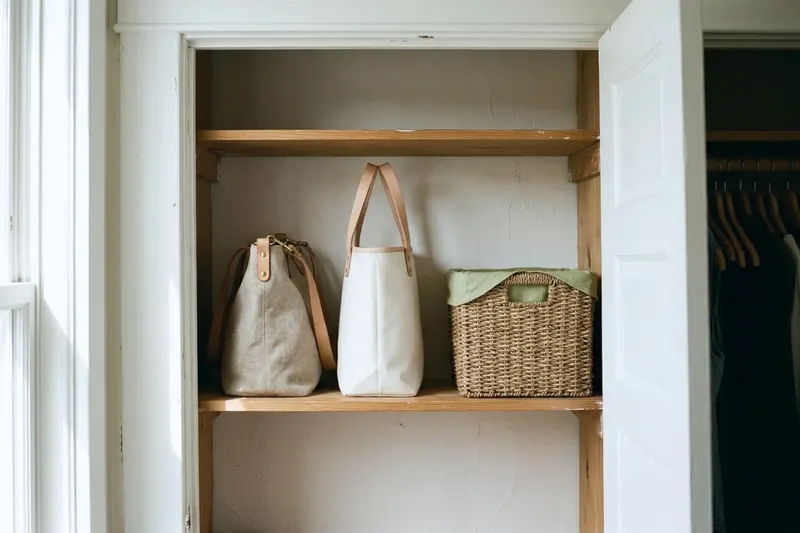
Take out any stray shoes and large bags. Build mudroom storage for heavy gear and muddy boots. Find a better spot for purses on a sturdy bedroom shelf.
2. Hang a second rod under short shirts and jackets
Most reach in closets feature a single rod near the top. A row of standard shirts leaves empty air below. Fill that gap with a hanging extender rod.
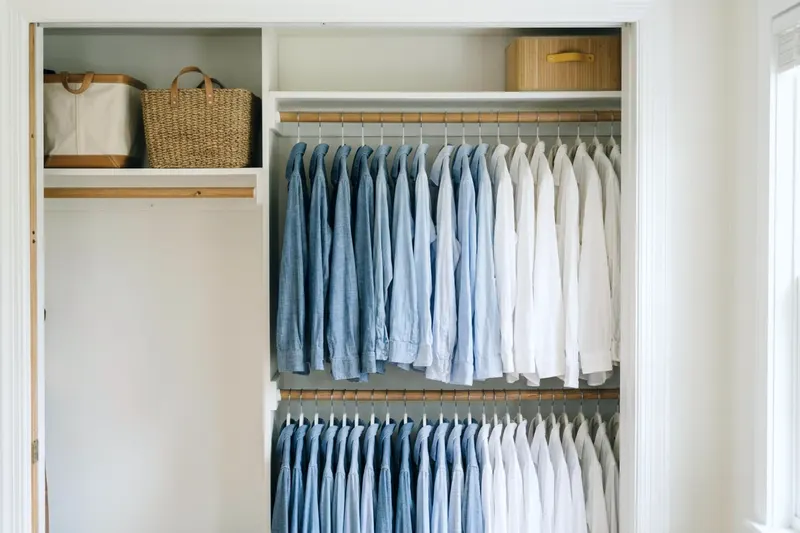
Hook an extender rod over the main wooden bar. Adjust the nylon hanging straps until the lower metal bar sits level. Make sure the lower bar sits high enough above the floor. This clearance keeps long pants from dragging on the carpet.
Move your folded pants and lighter skirts to this bottom tier, and check the rod's weight limit. You free up the main upper bar for long dresses and heavy coats. Separating your wardrobe into short and long sections keeps things visibly ordered.
3. Switch to slim matching hangers to free up rod space
Thick plastic and wooden hangers eat up valuable rod width. Heavy jackets on wooden hangers consume massive chunks of the closet. Swap them out for slim velvet hangers. These narrow replacements slide easily along a standard metal rod.
The velvet material grips the fabric firmly. Wide neck shirts and silky blouses are less likely to slide off. Matching velvet hangers give the closet a neat retail look. A single uniform color eliminates the visual noise.
Throw away bent wire hangers from the dry cleaner. Thin wire can stretch the shoulders of good sweaters and tangles easily. A uniform row of slim hangers makes the whole space work properly. You gain free rod space without throwing out a single shirt.
4. Turn every hanger backward to find what you never wear
A packed closet usually hides shirts you ignore completely. Turn every hanger so the metal hook faces the back wall. This small change requires no extra money or new tools. It acts as an automatic audit of your wardrobe.
Take clothes out when you get dressed. Wash the item and put it back in the closet. Hang it with the hook facing the front of the closet this time. Check the row again after a few months.
Any hanger still facing backward holds a garment you skipped entirely. Pull those untouched items out and donate them to a local charity shop. You stop letting unworn fabrics hog your valuable rod space.
5. Divide the top shelf so folded stacks stop toppling
Stacks of bulky sweaters lean and fall over constantly. The top shelf quickly turns into a messy mountain of mixed fabrics. Fix this avalanche with simple acrylic shelf dividers. These clear panels keep piles separated and upright.
Slide the acrylic dividers onto the wooden shelf. They clip on tightly without any screws or drill holes to form clear storage cubbies. Fold your heavy winter knits neatly and slide them between the plastic walls. The stacks stay locked in a straight column.
Make sure you do not stack clothes completely to the ceiling. Leave a small gap at the very top of each pile. You need that empty space to lift a sweater out cleanly. Cramming the space full leads to wrinkled fabrics and broken shelf dividers.
6. Move off season clothes into bins on the highest shelf
Heavy winter coats and thick wool pants block access to summer shirts. Pack away winter gear when the weather turns warm. Buy plastic storage bins with tight clamping lids. Clear bins let you see the contents from the floor.
Wash all the seasonal clothes before you store them away. Fold the clean clothes flat and lay them inside the plastic bins. Snap the lid down tight to help keep out dust and moisture.
Stack the sealed bins on the highest shelf above the hanging rod. Label the front of each bin with a piece of masking tape. Write the season and the contents on the tape. Swap the clothes back easily when the seasons change again.
7. Use the back of the door for belts, scarves and ties
Small accessories vanish inside deep dresser drawers and cardboard boxes. The back of a swinging closet door offers blank space. Hang an over the door rack in a few minutes. This vertical surface holds lightweight items without eating up shelf space.
Choose a sturdy metal rack with multiple small pegs. Drape your leather belts by their buckles along the bottom row. Loop delicate silk scarves and formal ties over the upper hooks. Spread the items out so they do not overlap.
This open system keeps every small item visible and ready to grab. Check that the door still closes fully with the rack on. You gain extra drawer space in your bedroom dresser for socks and underwear.
8. Add hooks on the side walls for robes and tomorrow's outfit
Reach in closets often have a narrow strip of empty side wall. This gap hides just past the inner door frame. It is the perfect spot for items you grab daily. Install a heavy-duty metal hook on the side wall.
Screw a metal hook securely into the wall, using the mounting hardware and weight limit on its package. Use this hidden spot to hold a thick bath robe or a bulky sweatshirt. It keeps heavy casual fabric off the main hanging rod. You reclaim hanging space for standard shirts and delicate blouses.
You can also use a simple side hook for daily planning. Hang tomorrow morning's outfit on it before you go to bed. Getting dressed in the dark winter mornings becomes a simple task. You stop digging through a packed closet when you are half awake.
9. Light the closet so you can see into the back corners
Dark corners encourage messy laundry piles and lost clothes. A standard bedroom ceiling light casts heavy shadows inside the closet box. You need direct internal light to see what you actually own. Proper lighting makes matching navy and black fabrics possible.
Buy a battery powered motion sensor light strip. Mount it to the internal ceiling or the underside of the top shelf. Use the sticky adhesive backing to attach it without wiring. The bright LED light clicks on the second you open the closet door.
You can see the true colors of your clothes clearly. A bright space makes you want to keep the shelves neat. You will spot a dropped shirt on the floor before it gets stepped on. The light clicks off automatically after you shut the door.
How to maintain a clean bedroom closet
Dirty clothes tossed on the floor ruin the whole system. Figure out where to put a hamper so you actually use it. Place a tall wicker hamper right outside the closet door.
Push empty hangers to one side of the metal rod immediately. Grouping them together makes hanging fresh laundry much faster. You skip the annoying hunt for a spare hanger. Spend two minutes every Sunday putting stray sweaters back on the correct shelf.