Stop crushing your handbags on the floor and start organizing purses in a closet with simple steps to stuff, stand and protect the ones you carry.
Where to keep purses so they stop slumping in a pile
Written up by Margo Lockridge
5 minutes to read
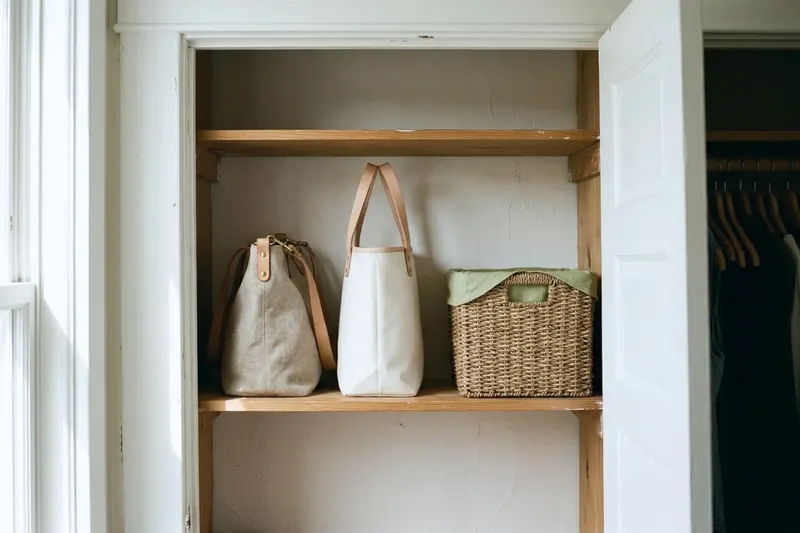
Handbags hold their shape best when they stand upright on a closet shelf instead of slumping in a pile. Sorting out the bags you actually carry and supporting their sides helps prevent creases. Taking time for organizing purses in a closet keeps every bag easy to grab on your way out the door.
Line up every bag and keep only the ones you carry
Pull every bag off the closet shelf and spread them out on a bed. Empty the pockets of each bag to see exactly what you have hidden inside. Separate the bags you reach for regularly from the pieces you never carry.
Put bags with broken zippers or torn linings straight into a trash bag. Bag up purses in good condition to drop off at a local thrift store. A smaller collection takes up much less room and helps clear out a closet packed to the door.
Stuff each bag so it holds its shape
Empty bags often collapse under their own weight and can develop creases over time. Keep the sides firm so the bag stands up straight on the closet shelf. Roll up soft items like old shirts or soft sweaters to fill the empty space inside. Push the fabric gently into the corners to support the sides of the purse.
Avoid packing the stuffing too tightly against the zippers or magnetic clasps. Too much pressure can push the seams outward and stretch the material. Press lightly on the outside of the stuffed bag to ensure the sides feel firm but yield slightly to your touch.
Fill the center until the bag stands completely upright on its own without slumping. Leave a little room near the top so the zipper closes smoothly across the track. Check the care label on your bag for any specific storage advice from the maker. Fasten all closures to hold the overall structure firm before putting the bag away.
Stand bags upright on a shelf with dividers between them
Clear a shelf at eye level to hold your daily bags ready for use. Stand the stuffed bags in a row with the long handles safely tucked inside. Slide shelf dividers between the bags to keep them from leaning into each other. Space the dividers wide enough to let each bag rest without squeezing the soft sides.
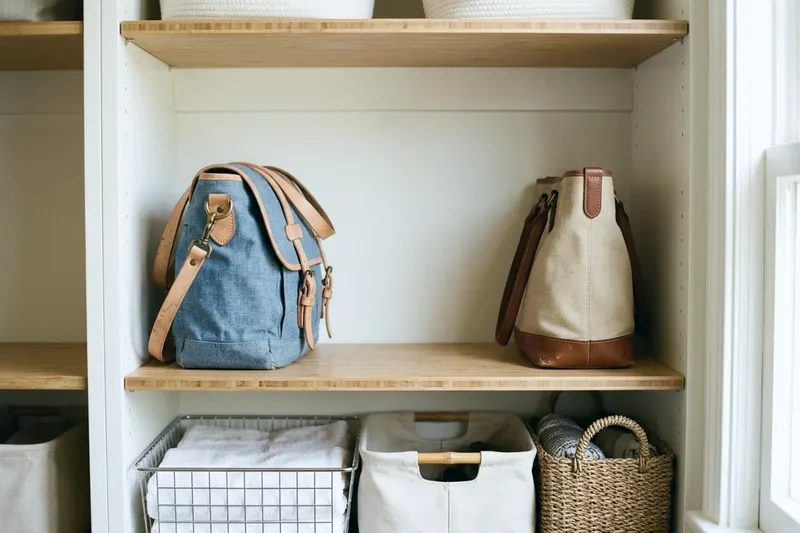
Getting your bags up on a shelf clears space below for a shoe rack. Push the bags back slightly from the shelf edge so they sit flat and secure. Leave breathing room between pieces so you can pull a bag out easily on a busy morning. Keep the everyday bag you carry most right at the front of the line.
Hang only sturdy bags on hooks and never by thin straps
A thick tote bag usually handles hanging better than a structured leather handbag. Install sturdy hooks on a blank closet wall, following each hook's weight limit and mounting instructions, to hold canvas or thick fabric bags. Slip the wide handle right over the hook so the bag hangs flat against the wall. Avoid hanging bags by thin straps because the constant pull can weaken the joints.
Empty out heavy items before hanging to reduce stress on the seams and straps. Give each hanging bag its own hook to stop them rubbing together on the wall. Check the handles occasionally to make sure they remain secure on the metal hook. Store delicate bags back on the flat shelf where their straps can rest completely unburdened.
File clutches and small bags upright in a bin
Small evening bags get lost easily when they sit loose on a deep closet shelf. Place a sturdy storage bin on the shelf to contain these smaller items securely. Stand each clutch upright in the bin exactly like papers in a file cabinet. Arrange them by height so you can see every top edge at a single glance.
Rigid box clutches require extra care so their hinges stay perfectly aligned. Lay these solid pieces flat on the bottom of the bin instead of standing them on edge. Stack them sparingly so the bottom clutch bears very little weight.
Slip soft cloth pouches between them if they have hard clasps that might scratch neighboring bags. Keep the bin near your larger bags so everything stays in one organized storage zone. Pull the whole bin forward when you need to pick a clutch for an evening event. Slide the bin back into place to keep the shelf completely clear of clutter.
Cover special bags in breathable dust bags
Special occasion purses gather dust when they sit exposed on a shelf for months. Slide these seasonal bags into the soft cloth covers they originally came in. Use a plain cotton pillowcase to cover a bag if you lack the original dust cover. Check the care label before wrapping your bags in plastic, and use breathable cloth when in doubt.
Cinch the top of the cloth cover loosely to keep dust out of the bag. Tuck the strings inside the bag so they do not dangle off the edge of the shelf. Store these covered bags on a higher shelf to save prime space for your daily rotation. Check the covers periodically and wash them if they collect heavy dust over the months.
Rotate a few bags out each season
Heavy winter bags take up valuable shelf space during the warm summer months. Pack your off-season bags into a sturdy storage box at the end of the season. Slide the box onto a high closet shelf until the weather finally begins to change. Bring your light summer bags down to the main shelf for quick and easy access.
Rotating your collection gives you fewer items to push aside on a busy morning. A seasonal swap is also a good moment to organize a linen closet. Check the empty shelf for dust and wipe it down before lining up the new rotation. A smaller active group of bags makes it much simpler to maintain lasting order in your closet.


