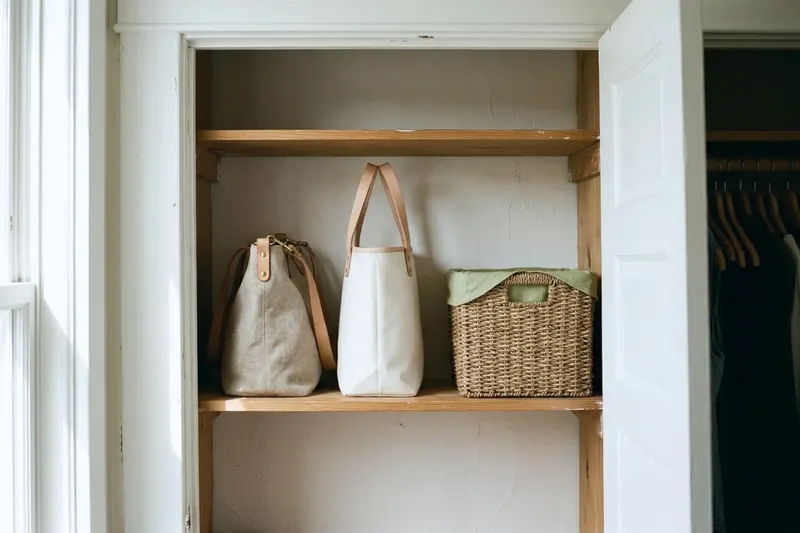
Stop tumbling towels and mismatched sheets with practical linen closet organization steps that keep every folded stack upright and easy to reach.
How to organize a linen closet so sheets stop toppling
Written up by Margo Lockridge
5 minutes to read

Tucking sheet sets inside pillowcases and installing firm shelf dividers stabilizes every stack. Solid barriers stop tall piles of fabric from sliding sideways. Clear bins corral loose toiletries and keep everyday essentials ready to grab.
Pull everything out and sort sheets and towels
Empty the entire closet and stack every towel and sheet on a bed. Wipe down the bare wooden shelves with a slightly damp cloth. Let the wood dry completely before you return any fabric to the closet. Lay down fresh shelf liners to help prevent snagged threads and wooden splinters.
Group your items by category as you pull them off the shelves. Pile the bath towels together and sort the bed sheets by size. Count the sets you need for each bed and the towels you need for each person, and set the rest aside.
Let go of thin, stained and orphaned pieces
Sort through the distinct piles and pull out frayed towels and faded washcloths. Discard any fitted sheets with stretched elastic bands. Set aside solitary pillowcases and flat sheets that lost their matching pieces. Bag up the torn fabrics so you only store pieces you actively use.
Every extra towel crowds the shelf and makes the remaining stacks harder to reach. Discard the rough and stained towels you always push to the back. A simpler collection helps keep your shelves from overflowing with unwanted fabric.
Store each sheet set inside one of its own pillowcases
Loose flat sheets and slippery fitted sheets create lopsided piles that slide sideways. Keep all the matching pieces together by tucking them into one pillowcase. Fold the fitted sheet and the flat sheet into equally sized rectangles. Stack the folded sheets and any extra pillowcases on top of each other.
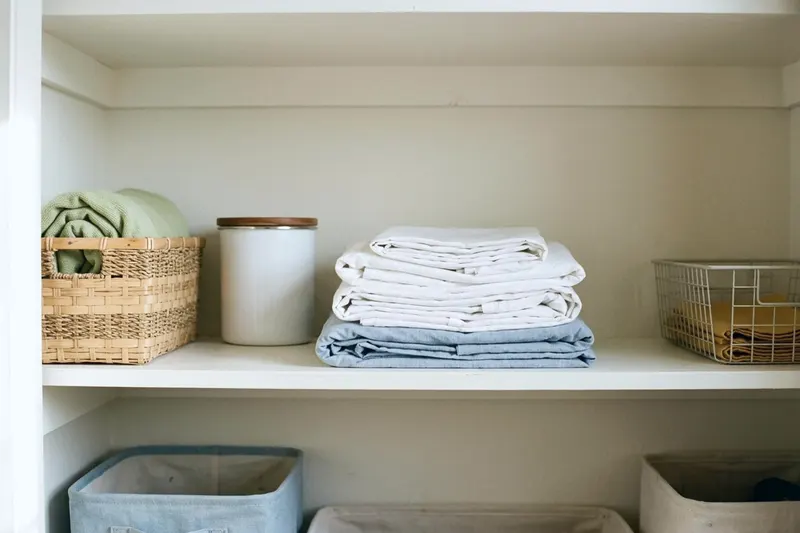
Slide the entire folded stack inside the remaining matching pillowcase. Fold the open end of the pillowcase flat against the fabric bundle. The pillowcase creates a tidy envelope with smooth edges that sit perfectly flat. You can grab an entire change of sheets with one single hand.
Stack the bundled sheets by bed size so you always grab the correct set. Keep all the fabric envelopes for a single room grouped together. Lay the bundles flat so they stack like bricks on the shelf.
Fold towels to fit the depth of the shelf
Towels look messy when they hang over the shelf edge. Fold each towel so the final shape matches the depth of your shelves. Lay the towel flat on a bed and fold both long sides inward to overlap. This hides the long side hems and creates a narrow strip with smooth sides.
Fold the long strip in half crosswise and then in half again. Adjust this final fold slightly to keep any decorative woven borders visible. Place the thick square on the shelf with the smooth folded edge facing outward. Aligning the folded edges cleanly at the front hides all the loose hem ends.
Fold washcloths and hand towels using the exact same method. Group all the bath towels together and keep the hand towels in separate piles. Separating the sizes stops small washcloths from vanishing into a pile of bath towels.
Give each shelf one job from guest sets to beach towels
Assign a specific purpose to every shelf so items stay in designated zones. Keep everyday items on the shelves positioned between your waist and your shoulders. Store your daily bath towels and regular bed sheets in this prime space. You bend and reach less when the essentials sit directly in front of you.
Move items you use occasionally down to the lower shelves. Store guest sheets near the bottom out of the way. Dedicate a separate space for large beach towels so they never mix with daily linens. Giving each category its own shelf stops you from disturbing one pile to reach another.
The one-job rule also helps if you are sorting a closet packed to the door. Grouping items by their job means you only touch the exact pile you need. Everyone in the house knows where to find a fresh towel.
Use shelf dividers or bins to keep stacks upright
Tall stacks of folded towels tend to lean and tip onto neighboring piles. Install rigid dividers on your shelves to give soft fabrics a solid wall. Clear acrylic panels slide onto wooden shelves to keep stacks completely upright. You can also wedge adjustable tension rods vertically between shelves as invisible barriers.
Place a divider between categories to prevent items from merging into one pile. A barrier between the bath towels and hand towels keeps each stack in its lane. You can pull a towel out and the surrounding items stay firmly in place. Solid boundaries keep the stacks from tumbling when you reach inside.
Use fabric or wicker bins for items that refuse to sit flat. Bins are ideal for holding rolled washcloths or slippery spare shower curtains. Ensure the bins fit the shelf depth perfectly so they sit securely. A row of matching bins gives small and awkward items a permanent home.
Keep spare toiletries in clear bins at eye level
Linen closets often serve as overflow storage for shampoo bottles and tubes of toothpaste. Loose bottles fall over easily and small boxes get lost behind large towels. Group your backup toiletries into clear categories like dental care and hair products. Place each category into its own clear plastic bin so everything stays contained.
Store these clear bins near eye level so you quickly see your supplies. The transparent plastic helps you avoid buying duplicates because your inventory stays visible. Slide the bin out to find what you need instead of reaching blindly. Containing the small bottles in bins helps keep leaks off the wooden shelves.
Bins help clear a bathroom counter covered in bottles by giving extra supplies a proper home. Keep heavy items like large bottles of lotion at the bottom of the bin. This stops heavy bottles from crushing the smaller cardboard boxes stored underneath.
Put rarely used blankets on the top shelf
The highest shelf in a closet is difficult to reach without a sturdy step stool. Reserve this awkward top space for bulky items you rarely pull out. Heavy winter duvets and thick seasonal quilts belong up high out of the way. Fold large blankets flat so they slide onto the shelf without scraping the ceiling.
Storing bulky blankets up high frees the middle shelves for your constant daily sheets. A dedicated top shelf keeps delicate winter fabrics away from everyday bath towels. Wrap these large blankets in breathable cotton bags to protect them from household dust. The bags help keep the fabrics clean.