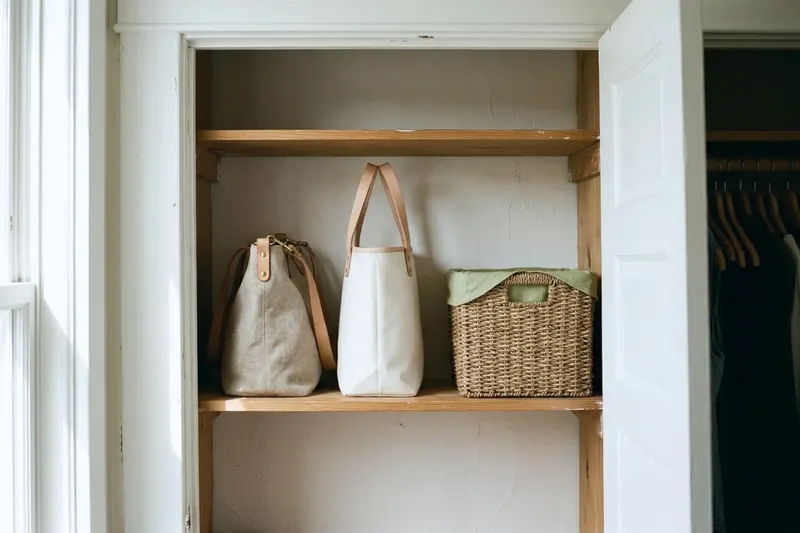
Proper sweater storage requires folding your heavy knits flat on a shelf or inside a drawer to stop the shoulders from stretching out of shape.
Folding sweaters so they stop stretching on the hanger
Written up by Margo Lockridge
7 minutes to read
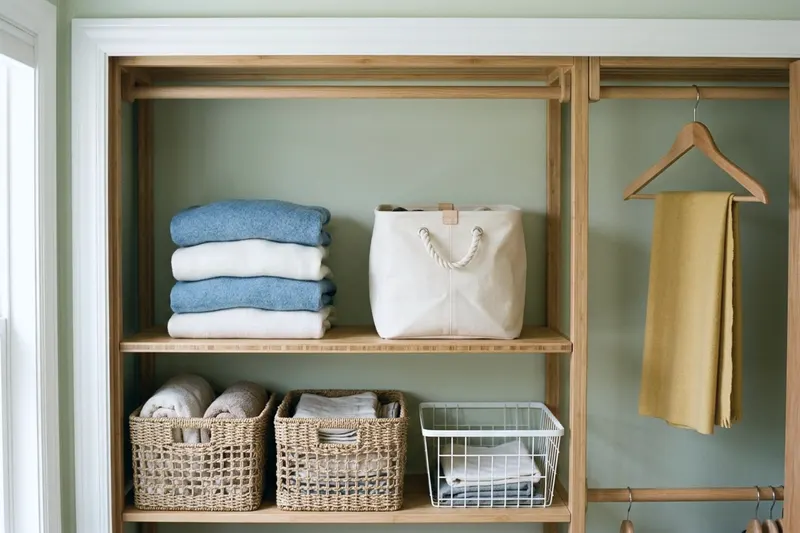
Hanging a heavy wool sweater leaves you with stretched shoulders and a warped hem. Proper sweater storage means folding your knits flat and stacking them on a closet shelf or inside a deep drawer. Folding removes the downward pull of gravity and keeps your cold-weather clothing looking neat and fitting well.
Why hanging knits pulls the shoulders out of shape
Hanging a knit garment forces the entire weight of the fabric onto the narrow points of a hanger. Sweaters consist of interlocking loops of yarn that naturally stretch and shift as you move. The constant downward pull of gravity in the closet elongates those delicate loops.
After a while on a rack, a heavy cotton or wool sweater can sag at the hem. The stiff ends of the hanger poke directly into the upper sleeves, which can create bumps at the shoulders. Very fine knits may suffer even faster under their own weight. The neckline warps, the sleeves stretch, and the original fit simply disappears.
Gravity works against any soft, stretchy material day and night. Laying the fabric flat takes that tension off the yarn. The yarn relaxes and the garment is more likely to keep its shape. Folding is one of the best ways to preserve a sweater.
Sort sweaters by weight and by how often you wear them
Pull every sweater out of your closet and lay them on your bed. You need to see the entire collection before you put anything away. Examine each garment closely for worn areas, severe pilling, and stretched cuffs. Toss any worn-out items you avoid wearing into a bag for a local thrift store.
You want to store only the pieces that still look good and fit your daily routine. Sort the remaining sweaters into distinct groups based on their material and thickness. Put the thick cable knits and heavy wool pullovers in a distinct pile. Put the thin merino wool, lightweight cotton, and fine cashmere pieces in a separate pile.
Heavy items require different folding and stacking techniques than the thin ones. Review each pile again and sort the items by how often you wear them. Put your everyday work pullovers and weekend hoodies in an active pile. Set aside the formal holiday sweaters and the extreme cold-weather gear you wear rarely.
Place the daily sweaters at eye level and push the occasional pieces higher up. If your shelves are overflowing, pull ideas from our closet organization ideas for a packed closet to clear more space. You need a dedicated, empty shelf or a deep drawer ready for the fresh stacks.
Fold each one in thirds so the sleeves tuck in
A good fold keeps the sweater flat and tucks the bulky sleeves inside to prevent lumps. Adjust the width of your side folds to match the width of your storage spot. A narrow fold fits perfectly in a hanging organizer, while a wider fold suits a broad wooden shelf. Ensure the final width stays entirely consistent across all your folded sweaters for a tidy stack.
Follow these basic steps to fold any standard knit:
- Lay the sweater face down on a clean, flat surface like a mattress.
- Smooth both sleeves down firmly so they sit flat without bunching in the middle.
- Fold the left arm straight across the upper back of the sweater.
- Fold the right arm entirely over the left arm to keep the back neat.
- Fold the left side of the sweater inward toward the center of the back.
- Fold the right side inward until the edge meets the folded left side perfectly.
- Bring the bottom hem of the sweater straight up to meet the top collar.
- Press down gently to smooth the newly folded edge and remove trapped air.
The garment should now form a neat, compact square that will sit evenly on a shelf. The bulky sleeves remain trapped safely inside the new vertical folds of the fabric. Thick hoodies might need a fold in half rather than thirds to fit inside a shallow space.
Stack by weight, with heavy knits lower and fine knits on top
Building stable stacks keeps your closet looking organized and prevents the garments from sliding. A stack of folded sweaters behaves exactly like a small building on your shelf. Every stack requires a solid, heavy foundation to stay fully upright and completely stable. Place your thickest, heaviest sweaters at the very bottom of the stack.
A bulky fisherman sweater or a heavy cotton pullover provides a wide, flat base. Add another heavy sweater directly on top to continue building the solid foundation. Keep these heavy stacks short to avoid a leaning tower of thick fabric. A few thick sweaters are usually the limit before the pile becomes unsteady.
Place the thin, lightweight sweaters on top of the heavy ones or in a separate stack. Fine merino wool and soft cashmere compress very easily under any significant weight. Placing a heavy sweater over a thin one crushes the fibers and creates hard creases.
Limit all your stacks to a highly manageable height for easy daily access. A tall stack forces you to knock the top items off when you reach for the bottom one. Then pull out the sweater you want quickly with a free hand.
If you store these stacks in a dresser, you can add dresser drawers and dividers to keep the rows neat. In a drawer, you can also stand folded sweaters upright like files so you can see every piece at a glance.
Use a shelf divider or a bin so stacks stay upright
Even a short stack of soft knits will lean and tumble over time. The edges of the folded fabric compress, and the pile slumps toward the empty space on the shelf. You need rigid side support to keep the clothing stacks standing tall all season.
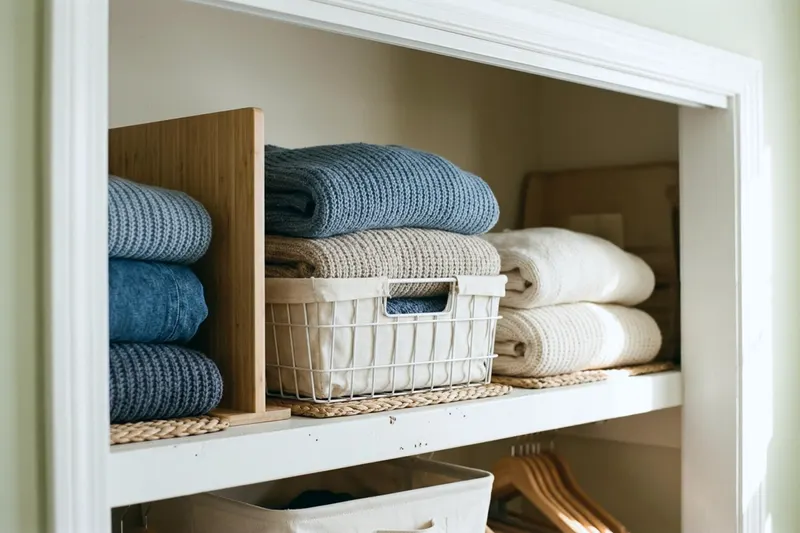
Slide a clear acrylic shelf divider onto your wooden closet shelves and position it closely beside the stack. The solid barrier acts just like a sturdy bookend for your winter clothes. The sweaters stay neatly contained within their designated columns without slumping over the sides. Clear dividers maintain a clean look while holding everything firmly in place.
A fabric storage bin offers a smart alternative if you have wire closet shelves. Wire shelves leave deep lines in soft clothing and offer a poor base for stacking. Place your folded sweaters into a firm-sided canvas bin, then place the bin on the wire rack. The bin provides a solid bottom and tall sides to hold the knits securely.
Match the width of your folds to the width of the bins. A narrow bin might hold a single column of sweaters, while a wide bin can hold multiple columns side by side. Keep the bins shallow enough that you can see the top edge of the sweaters inside. Pull the entire bin off the shelf when you need to select a garment.
Hang only the sturdy cardigans and vests that hold their shape
Not every piece of heavy knitwear must sit tightly folded on a shelf. Some pieces hold their shape well enough to stay on a hanger. Stiff, tightly woven vests and heavy structured cardigans can tolerate hanging without damage. Check the shoulder seams and the overall fabric density of each garment.
If the shoulder features reinforced stitching or a stiff inner lining, it will likely survive on a hanger. Test the sturdy garment by hanging it carefully for several days. If you notice any downward pull or slight puckering, remove it from the hanger and fold it.
Buy a set of wide wooden hangers for any knitwear you decide to hang. A wide wooden hanger or a padded velvet hanger spreads the weight across a larger surface area. This wider contact point prevents the sharp shoulder bumps caused by thin wire or plastic hangers.
Never hang an unbuttoned cardigan by its bare shoulders alone. Button the cardigan fully from bottom to top before you hang it. Buttoning distributes the weight evenly across the entire garment and keeps the front panels from stretching unevenly. If the cardigan lacks buttons, fold it and put it on the shelf.
Rotate off-season knits into a breathable bin
When the weather warms up, you need to clear the heavy winter sweaters out of your active closet space. Storing them away frees up room for lighter clothing and keeps the knits safe from dust and damage. Wash or dry clean every single sweater before you pack it away for the summer.
Even invisible oils from your skin may attract insects or cause stains over the warm months. Ensure every washed piece is completely dry before placing it into dark storage. Lingering moisture trapped inside the fabric can lead to mildew in an enclosed space.
Place the clean sweaters in breathable cotton canvas storage bins. Cotton allows air to circulate through the fabric while keeping dust and pests out. Avoid plastic vacuum bags or heavy sealed plastic tubs entirely. Solid plastic can trap heat and moisture, which may be hard on natural fibers.
Store the canvas bins in a cool, dark, and dry place inside your home. A top shelf in the bedroom closet or a spot under the bed works perfectly. Keep the bins strictly out of hot attics and damp basement floors.
See what belongs in the coat closet if you want to store a few cold-weather pieces near the front door. Check the label on any moth deterrent before you add one to the canvas bags.