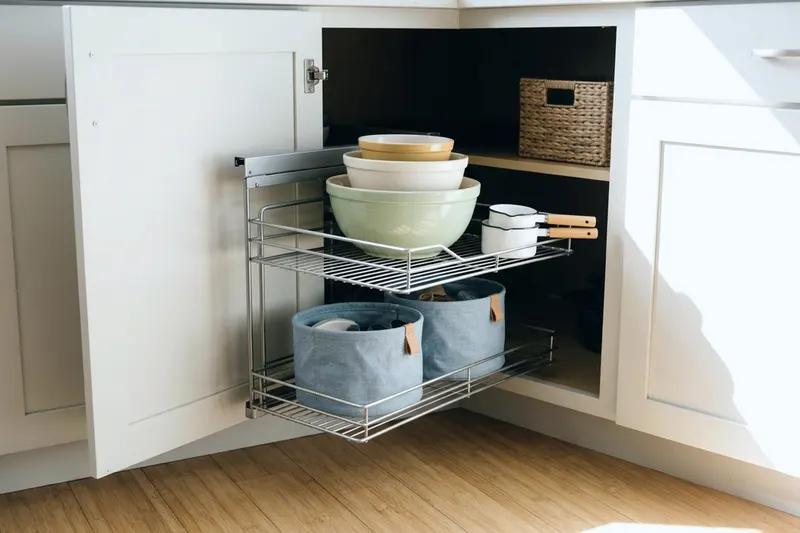
Reorganize your deep spice cabinet so every jar sits in plain sight.
A spice cabinet that stops swallowing jars at the back
Toss dead spices, group bottles by meal, and add a turntable for the back row.
Written up by Margo Lockridge
7 minutes to read

A spice cabinet works best when you can see every jar without moving anything out of the way. You fix a dark and crowded shelf by pulling everything out, throwing away dead spices, and adding simple organizers that push the back rows into plain sight.
Sort your jars and throw away dead spices
Start the job by clearing your shelves completely. Pull every jar, tin, and packet out of the cabinet and set them all on the kitchen counter. Wipe the bare shelves with a damp cloth to pick up spilled powders and sticky residue.
Set up a quick sorting station before you start checking the jars:
- A large trash bag for dumping stale powders
- A recycling bin for empty glass bottles
- A damp microfiber cloth to wipe sticky residue off the keepers
- A dry towel to dry the threads on the glass jars
- A notepad to write down any staples you throw away
Spices lose their volatile oils and flavor over time. Pick up each jar and twist the lid off. Give the contents a quick sniff.
Fresh spices carry a sharp and distinct aroma. Old spices smell like plain dust or old paper. Toss anything that lacks a strong scent. Dump the stale contents directly into the trash bag and put the empty glass jars in your recycling bin.
You will likely find duplicate bottles during this process. Pour the contents of a newer jar into the older one to combine them, as long as both still smell fresh. Throw away the extra empty bottle to free up shelf space.
Spices often leave a sticky film on the outside of the glass. Wipe down the jars you plan to keep with your damp cloth, drying them immediately with a towel so moisture stays out of the threads. Clean threads help the caps screw on tight, keeping the air out and the flavor locked inside.
Find a spot near your prep area away from heat
Spices need a cool and dry home to keep their flavor intact. The absolute worst place to store them is the cabinet directly over your stove. Heat from the oven can dull the flavor of delicate herbs. Steam from boiling pots can creep into the jars and clump powdered garlic and onion.
Pick a cabinet a short walk away from your main cooking zone. You want the jars close enough to grab while browning meat, but far enough away to avoid the intense heat of the burners. An upper cabinet works much better than a low base cabinet or a deep drawer. Storing spices higher up lets you look directly at the labels without bending over.
Avoid keeping spices on open shelves that catch direct sunlight. Direct sunlight can fade the color and flavor of dried spices.
A closed cabinet door keeps spices out of direct light.
Match your organizer to the depth of your shelves
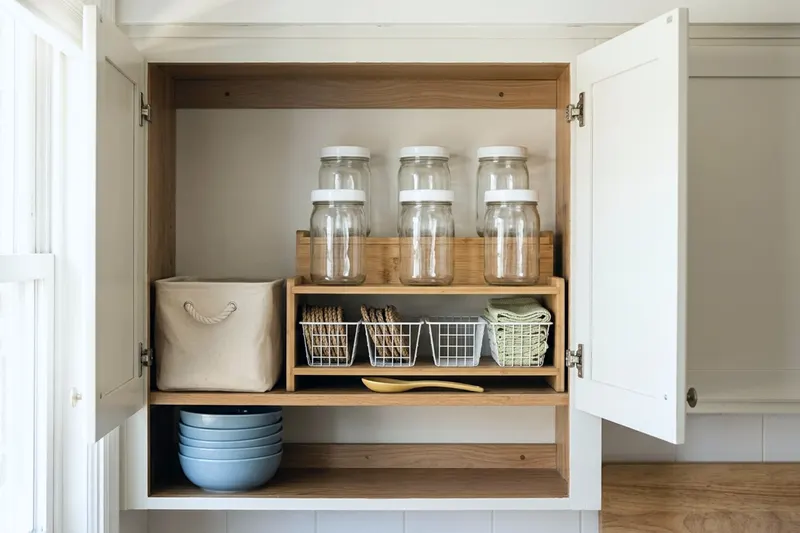
You need a physical tool to lift the back rows up so you can read their labels easily. Shallow cabinets require different organizers than deep ones. Tiered plastic risers lift the back rows up like stadium seating.
You place the shortest jars in the front and the tallest bottles on the top tier. These stepped risers fit many upper cabinets. Look for expandable risers that slide out to touch both side walls, which stops jars from falling down the side cracks.
A wall-mounted rack works exceptionally well on the back of a solid cabinet door. You attach a wire or plastic frame directly to the wood. The jars face outward when you swing the door open, completely freeing up the internal shelves.
You must check the clearance inside the cabinet before you mount a door rack. Push the internal shelves back a bit so the door can shut completely without the new rack hitting the shelves inside.
If you want a quick fix, run a basic tension rod across the back of the shelf. You can set the back row of jars on top of the rod to raise them slightly above the front row. This temporary riser installs in seconds without any tools.
If you rely on wire shelving, lay a thin sheet of clear acrylic over the metal rungs. Jars can tip over on open wire racks. A flat plastic liner gives small bottles a solid surface to stand on. You can use similar pantry shelving ideas to stabilize any wobbly cans or jars in your kitchen.
Group your jars by the meals you cook
Alphabetical order seems like a logical plan at first, but it falls apart after a few days of cooking. You use cumin, oregano, and chili powder together for a pot of chili, yet they sit far apart in an alphabetized row. Storing spices by meal makes the daily cooking routine much smoother.
Keep your Mexican spices in a tight cluster. Put your Italian herbs in another group nearby. Store your curry powders, cardamom, and turmeric side by side.
When you make a specific meal, you simply grab a handful of jars from the exact same spot. You return them to the shelf just as easily.
Create a separate section for heavy grilling rubs and meat seasonings. You can also dedicate a small basket to bulky packets of taco seasoning or gravy mix, keeping them upright and grouped with their related flavors. If you bake bread frequently, keep your yeast, caraway seeds, and poppy seeds in their own dedicated basket.
Grouping by flavor profile stops you from hunting across multiple shelves for the specific spices that always go together.
Add a turntable to spin the back row forward
A deep spice cabinet easily hides smaller bottles in the dark shadows at the back. You inevitably knock over the front row trying to reach something hidden out of sight. A flat plastic turntable helps with this blind spot. You place the disc on the shelf, spin the wheel, and the hidden jars come right to the front edge.
Choose a turntable with a small raised lip around the outside edge. The lip keeps round bottles from sliding off into the cabinet when you spin the tray. Place your tallest and heaviest bottles in the center of the wheel. Arrange the shorter jars around the perimeter so you can see every label.
A double-tiered turntable works well if you have tall cabinets. The lower level holds short tins and squat jars, while the upper level holds standard bottles. Check the height of your shelf before you buy a double-tiered model, as you need enough clearance to lift jars off the top rack without hitting the ceiling of the cabinet.
A turntable wastes a small amount of corner space, but the sheer convenience makes up for the loss. You never have to reach blindly into the back again. You might find this simple spinning trick helps you reach the back of other awkward cabinets.
Keep baking spices on their own shelf
Not all spices deserve prime real estate. You reach for salt, coarse black pepper, and garlic powder every single day. Cinnamon, nutmeg, and ginger might only come out for weekend baking or holiday desserts. Keep your daily savory blends at eye level.
Move the sweet baking spices to a higher shelf. This keeps them out of the way during dinner prep but still perfectly accessible when you bake a pie. Put vanilla extract, almond extract, and baking soda up with the cinnamon. Grouping the sweet items together creates a dedicated baking zone.
Use the very top shelf for bulk refill bags and spare bottles. When your everyday jar runs out, you pull the refill down from the top shelf to top it off. Keeping the bulky bags out of your daily sightline makes the main shelves look neat and orderly. A tidier shelf also helps you keep the kitchen counter clear of unnecessary clutter while you cook.
Track empty bottles on the cabinet door
A jar of oregano runs out and you forget to buy more until you need it again. You can prevent this frustration by keeping a running inventory right where you store the spices.
Tape a small piece of heavy paper to the inside of the cabinet door. Keep a pen right next to it, resting on a shelf or attached to the door with a piece of string. Write down the name of any spice that runs low the exact moment you notice it.
Take a quick photo of the list with your phone before you go to the grocery store. You always know exactly what you need while walking down the spice aisle. This simple habit prevents you from buying an extra jar of basil while completely forgetting the paprika you actually need to finish dinner.