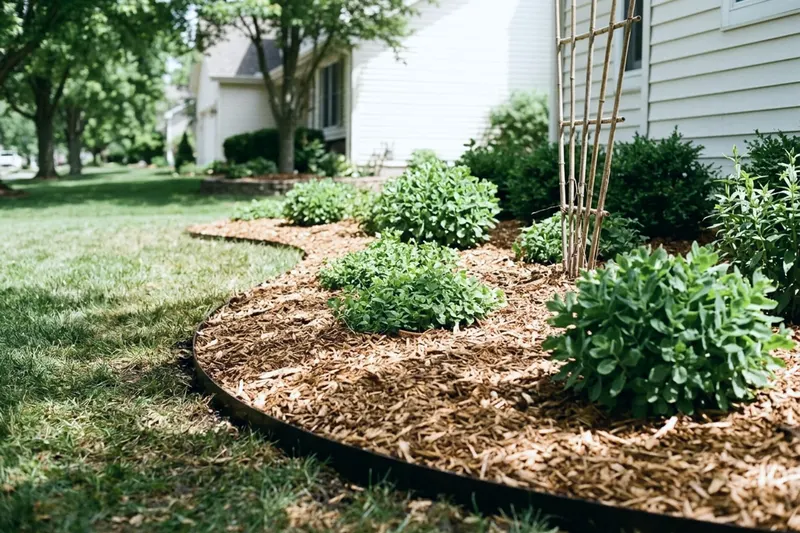
Turning a patch of lawn into a wildflower garden takes native seed and careful mowing, giving you a beautiful space that cuts down on weekly yard work.
Turning a patch of lawn into a wildflower garden
Written up by Linnea Thorsby
5 minutes to read

A patch of lawn you are tired of mowing can become a native wildflower planting that needs one cut a year once it is established. The first two years take real work and some patience. After that it needs only occasional weeding and one mowing a year.
Check local rules and talk to your neighbors before you stop mowing
Call your town office or look up its code online before you buy a single seed. Ask specifically about height limits and rules for planted meadows.
Penn State Extension advises researching local ordinances before you start. Some towns have rules about how tall yard plants may grow, and a homeowners association may add its own.
If local laws conflict with your plans, apply for a variance. Getting permission in writing can help protect you from fines and from having to tear the planting out later.
Share your plans with your neighbors before you dig. Tell them the tall growth is a planned garden, and show them the mown path you will keep through it. A short talk now heads off complaints during the scruffy first summer.
Pick a sunny patch away from the house, deck and play areas
Most wildflowers bloom best in a sunny spot, so choose the brightest part of the yard. Watch the spot through a day to see how long the shade stays off it.
The CDC advises clearing tall grasses and brush around homes and at the edge of lawns. It also advises keeping playground equipment, decks and patios away from yard edges and trees. Ticks live in grassy and brushy areas, so put yours well away from where people sit and play.
Leave a band of short lawn between the patch and the house. That buffer also gives you a clean edge to mow along. For the beds right against the house, see these low-maintenance garden ideas.
Strip or smother the grass before you sow
Mark the outline of the patch with a hose or rope first. Curved or squared edges both work, as long as you can mow cleanly along them.
Seed needs bare soil, so the grass has to go first. Penn State Extension suggests cutting sod into strips with a shovel, undercutting it and removing the strips to a depth of 1 to 1 and a half inches.
Roll or stack the strips and haul them to a compost pile. Rake the exposed soil level and pull out any chunks of root you can see.
If you would rather skip the digging, smother the grass instead. Lay flat cardboard over the turf, overlap the edges and cover it with soil. The grass beneath usually dies without light, though this route takes longer. It also fits well with these ways to keep weeds down.
Choose a native seed mix suited to your region
Check that the seller can tell you where the seed was grown. Seed from your own region is usually a good match for your local weather and soil.
Penn State Extension says prepackaged seed mixes often contain mostly nonnative species, some of which can spread into nearby fields. A native mix built for your region helps avoid that problem.
Ask a local native plant nursery or your county extension office which mix suits your soil and climate. Tell them how much sun the patch gets and whether the soil stays wet or dries out.
Read the species list on the bag before you buy. A good regional mix names its plants instead of hiding behind a vague label.
Sow, press the seed in and keep it moist
Penn State Extension says spring is generally the best time to sow a meadow, with April ideal in Pennsylvania. That month is for Pennsylvania, so check the best timing for your own region.
Scatter the seed evenly across the bare soil.
Press the seed into the soil by walking over the patch or tamping it with a flat board. Follow the seed supplier's directions on how deep to sow.
Water new plantings as needed for the first six weeks. Keep the surface from drying out while the seedlings come up.
Mow the first summer before weeds get tall
Walk the patch every week or two through the first summer. Catching weeds early tells you when the next mowing is due.
Weeds often sprout faster than wildflowers in the first summer, and they can shade the seedlings if you let them. Penn State Extension says to mow a new meadow the first time before weeds reach 8 inches.
Set the mower to cut just above the desired plants, at about 4 inches. Mow again whenever the weeds climb above the young wildflowers.
Keep thick clumps of clippings from smothering the seedlings. The mowing looks harsh, but it gives the slow growing native plants the light they need.
Cut it once a year in late winter and keep a mown path through it
Penn State Extension says that after the first year, a meadow should be mowed late in winter or early in spring before the new growth begins. Wait until the stems have stood through winter, then cut them down.
Clear or chop the cuttings so new growth reaches the soil. Do the job before fresh shoots appear, so you do not cut growing plants.
Keep a path mown through the middle, or along one edge, all season long. A cut path tells neighbors the planting is intentional. It also gives you a clear place to walk and to pull weeds.
Expect two or three years before it fills in
Take photos of the patch each season so you can see the change. Slow progress is normal, and a sparse first year does not mean the planting has failed.
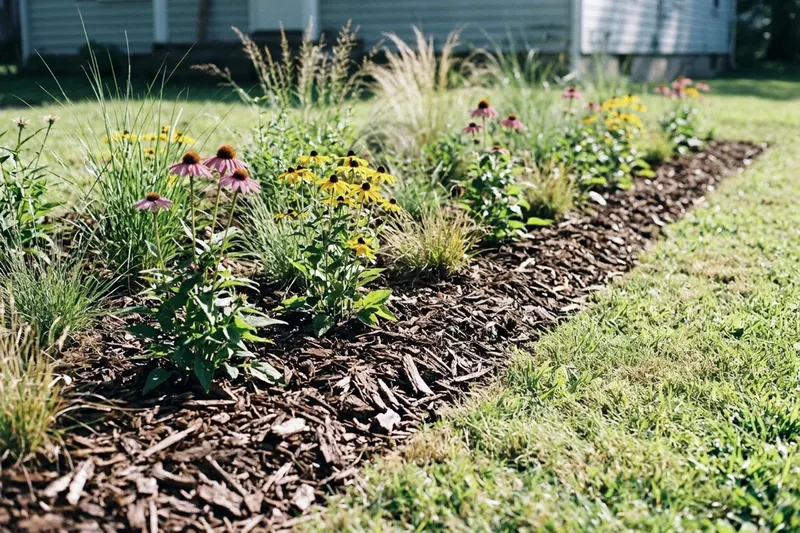
Penn State Extension says a perennial meadow usually takes two or three years to establish and then needs only occasional weeding and one mowing a year. The first year often looks thin and weedy.
Some of the plants spend that time building roots instead of flowers. Do not judge the patch by what you see above ground.
Pull invaders by hand as you walk the path, and leave the native seedlings alone. By the third season the planting should be filling in, though it still needs occasional weeding.