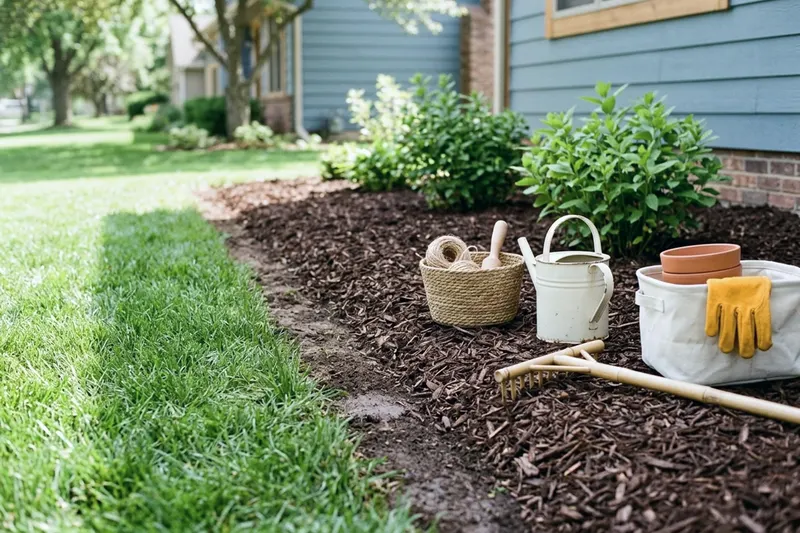
Stop pulling weeds by spreading organic mulch 4 inches deep in your shrub beds and 2 to 3 inches deep around your trees to smother seeds.
Which organic mulch keeps weeds down and how deep to spread it
Written up by Linnea Thorsby
5 minutes to read

Wood chips, pine needles and shredded bark help keep weed seeds from sprouting in your yard. Spread your organic mulch 4 inches deep in shrub beds and 2 to 3 inches deep around trees. Keep the material away from plant stems and pull it at least 6 inches back from tree trunks.
How organic materials stop weeds before they sprout
A thick layer of organic material blocks sunlight from reaching the bare soil. The layer also keeps blowing seeds from landing on bare dirt.
Wind drops weed seeds on top of the dry mulch throughout the year. Those new seeds often fail to sprout without contact with moist soil. The few persistent weeds that push through can be pulled by hand. Pulling them early is one way of keeping weeds down without herbicide.
Wood chips and shredded bark for shrub beds
Wood chips and shredded bark work well across large residential garden beds. These heavier materials sit firmly on the ground without blowing away easily. Shredded bark locks together better than large chunks of flat wood. This interlocking texture can help hold the pieces in place.
Colorado State University Extension says wood chips and bark do not tie up soil nitrogen when left on the surface. You can spread them safely around your growing shrubs and perennial flowers. Always leave the wood chips resting on top of the soil. Mixing wood chips or bark directly into the soil can cause a nitrogen shortage.
Use a wheelbarrow to move heavy loads of bark from your driveway. Dump small piles across the bed to make the final spreading easier.
Pine needles, leaves and grass clippings for quick cover
You can use everyday yard waste to create your own organic mulch. Pine needles, fallen leaves and dried grass clippings cover bare dirt quickly. Run a lawnmower over dry leaves to chop them into smaller pieces. Shredded leaves settle more tightly than whole large leaves.
Spread dry or thin layers of grass clippings from your mower to suppress weeds in bare spots. Skip the clippings entirely if your lawn has been treated with herbicides or other pesticides. Treated grass clippings can harm the shrubs and flowers in your beds.
Dry pine needles ignite more easily than heavier bark or wood chips. Keep pine needles away from your house siding and outdoor fire pits. Spread these lighter materials in areas protected from strong winter winds.
Pull weeds and water the bed before you spread
Clear the existing vegetation before you apply any new ground cover. Pull tall weeds out by hand first. Throw the pulled weeds into a yard waste bag to prevent reseeding. You can handle the remaining short growth by weeding beds with a garden hoe.
Rake the soil smooth and remove any large rocks or broken branches. Water the bare ground thoroughly before you cover it with any material. Organic mulch traps existing moisture in the dirt for long periods. Starting with dry soil leaves the bed dry beneath the mulch.
Wait for the surface water to soak completely into the dirt.
Spread it about 4 inches deep in beds to smother weed seeds
Colorado State University Extension says wood chip, grass clipping and other mulches should be 4 inches deep to suppress weed growth. A thinner layer allows direct sunlight to reach the bare soil surface. Weed seeds can sprout through a shallow covering and take root in your beds.
Measure the depth with a standard tape measure as you dump the material. Use a heavy pitchfork to move wood chips from your wheelbarrow to the ground. Spread the mulch evenly across the entire bed with a steel bow rake. Keep the surface completely flat rather than mounding it in the middle.
Push the material evenly into the corners of your garden borders. Check the total depth in several spots to ensure complete coverage.
Keep mulch thinner around trees and pulled back from trunks
Trees require a different spreading approach than open shrub and flower beds. Penn State Extension says mulch around trees should preferably be 2 to 3 inches deep. Extend the material out from the trunk to the drip line of the branches. The drip line is the ring where rainwater falls from the outermost leaves.
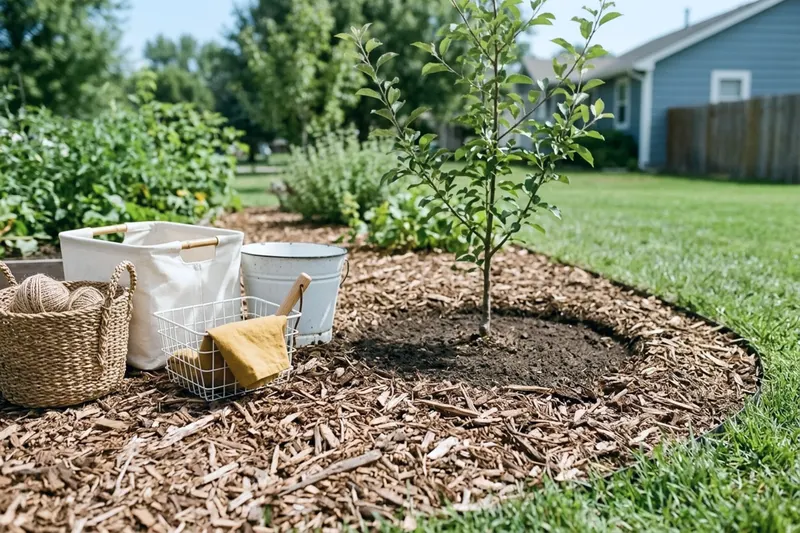
Keep the layer of material entirely off the actual tree trunk. Colorado State University Extension says to keep mulch at least 6 inches back from tree trunks. Leave a circle of bare soil in that 6-inch space around the base.
Colorado State University Extension also says to not let mulch pile up around plant stems. Piled material can hold moisture against the bark and damage it. Pull the chips away from the base of every shrub in your yard.
Skip plastic sheeting and fabric under organic mulch
Colorado State University Extension does not recommend black plastic or woven plastic weed barriers beneath mulch in planted areas. Organic material naturally breaks down and turns into new soil over time. Weed seeds eventually blow in and sprout in that fresh dirt layer. Those weeds then root in the mulch above the barrier instead of the soil below.
Black plastic is impermeable and blocks oxygen and water from reaching the soil. Plant roots can struggle when the soil cannot breathe. The plastic layers also tear easily when you walk across the bed.
Landscape staples eventually pull out of the ground as the fabric shifts. Shredded barrier fabric looks messy when it peeks through the surface chips. Apply your wood chips or pine needles directly to the bare soil instead.
Check the depth before you add more each year
Organic mulch shrinks as it decomposes and settles on the soil. Check the remaining depth in early spring before you buy new supplies. Rake the old material to loosen it and measure what remains.
Add only enough fresh mulch to bring the total bed depth back to 4 inches. Add enough around your trees to reach that 2 to 3 inch depth. Dumping a fresh 4 inches over an existing layer can leave the layer too deep. CSU says more is not better, since too much mulch can reduce air exchange with the soil.
Order your replacement bags or bulk loads based on that missing depth. Spread the new layer lightly over the old layer with a garden rake. You get a clean look while cutting down on weeding and mowing.