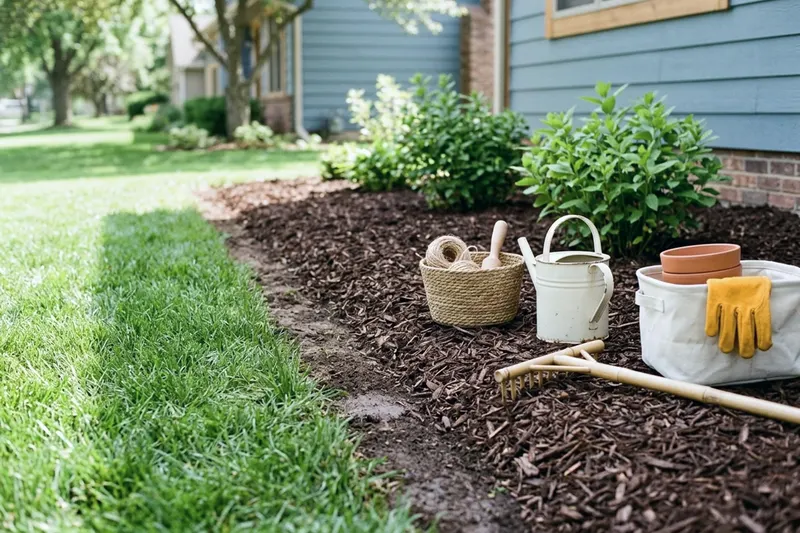
A regular raking routine and a thick layer of stone act as a strong weed preventer for your gravel driveway or path so fewer weeds take root.
What actually keeps weeds from coming up through gravel
Written up by Linnea Thorsby
9 minutes to read

Weeds sprout in a gravel driveway when dirt settles between the stones. Regular raking and a thick stone layer work as a weed preventer that stops seeds from rooting. Keeping the gravel deep and disturbing the surface limits the soil build up that plants need to survive.
Why weeds root in the dust above your gravel base
Dust blows onto your driveway and settles between the stones. Leaves fall from nearby trees and decay into a thin layer of dirt over your clean gravel base. Weed seeds blow in on the wind and drop into the rocks. They find the trapped dirt and sprout exactly like they do in a garden bed.
The rocks themselves offer no food or moisture for young plants. The soil trapped between the stones causes the problem. Car tires crush softer stones into powder and add to the soil volume. A gravel path that looks clean from a distance often holds enough dirt to grow a dense patch of weeds.
Rake the stone surface on a regular schedule
Dragging a metal rake through the gravel breaks up small dirt clumps. Cornell turfgrass weed guidance says keeping a thick layer of gravel and raking it regularly helps curb weed growth. The heavy tines disrupt tiny weed seeds before they grow deep roots. Raking exposes hidden, damp soil to the sun and wind so it can dry out.
Cornell says regular raking limits soil build up and stops weeds from rooting in the soil between and below the gravel. Doing this regularly breaks the plant growth cycle. You pull the rake firmly through the top layer of stone. The rocks shift and any young sprouts lose their grip on the dirt.
Choose the correct rake for heavy stones
A plastic leaf rake bends and snaps against heavy gravel. You need a rigid metal bow rake to pull stones and disturb the soil. A standard bow rake has thick steel tines that dig into the surface. The straight back edge of the rake head helps you push stones flat again after you break up the dirt.
Avoid lightweight shrub rakes because the tines sit too close together. Small stones jam between narrow tines and force you to stop and clear them. A standard steel garden rake provides the correct spacing for most driveway gravel. The long fiberglass or wood handle gives you the power to drag heavy material.
Clear leaves before they decay into dirt
You can slow the soil build up by removing leaves and grass clippings early. Use a leaf blower to clear the gravel after you mow the lawn. Blowing the debris away stops the plant matter from rotting down into dirt.
Sweep fallen leaves off paths with a stiff push broom every fall. Wet leaves cling to the stones and break down rapidly if you leave them. Clearing the surface starves the future weeds of the dirt they need. This quick cleanup is a smart low-maintenance garden habit that saves pulling later.
Keep the gravel layer thick enough to block roots
A thin scattering of stones leaves the soil below exposed to the weather. Seeds push their roots right past the shallow gravel and into the firm ground beneath. A thick layer of stone helps curb weed growth by keeping young roots from reaching the soil below.
Maintain a thick layer of gravel on a walking path. Driveways may need a deeper layer of stone for vehicle weight. A thick layer also helps limit sunlight reaching the ground below.
Select a stone size that locks together
Large river rocks leave massive gaps where dirt and debris gather quickly. Round pea gravel shifts under your feet and struggles to hold a firm shape. Crushed stone locks together and creates a tight surface that leaves less room for dirt. The sharp, angled edges of crushed limestone fit tightly against one another.
A tight surface makes it harder for blowing seeds to work their way down. You want gravel pieces small enough to rake easily but large enough to resist washing away in the rain.
Fill low spots where water and dirt collect
Potholes in your driveway act as traps for mud and organic matter. Rain washes dirt from the high spots down into the depressions. The water sits in these low areas and creates a damp environment perfect for seeds. Weeds sprout in these puddles fast and grow strong roots in the wet mud.
Dragging a rake over a pothole only hides the problem for a short while. The first heavy rain washes the loose gravel away and exposes the hole again. You must fix the depression to stop dirt from gathering in the same spot.
Use a heavy steel tamper to pack the bottom of the hole flat. Pour in a layer of sharp crushed stone and pound it down with the tamper. You repeat this process layer by layer until the hole matches the height of the driveway. A solid, flat repair sheds water and leaves seeds dry on the surface.
Add a fresh layer of gravel every few years
Car tires push gravel into the mud and heavy rain washes stones into the yard. A deep, weed-blocking driveway eventually becomes a shallow one. Cornell says to consider adding a new gravel layer every few years. You bring in fresh rock to restore the depth and bury the old, dirty surface.
The price of a cubic yard of gravel varies with the stone type and your location. Spreading this new material covers the dirt that slowly gathered over the past seasons. The fresh rocks lock together and reset your defense against new seeds. A thick new layer instantly improves the look of a tired path.
Steps to reclaim a path overrun by weeds
When weeds completely take over a section of gravel, raking is no longer enough. The roots bind the stones and soil together into a solid mat. You must break up this mat and remove the trapped dirt to restore the gravel.
- Pull the large weeds by hand and shake the loose stones from their roots.
- Dig into the matted gravel with a heavy garden fork to loosen the compacted dirt.
- Scoop the dirty stone mixture into a wheelbarrow using a square transfer shovel.
- Pour the stones over a piece of hardware cloth to sift the dirt out of the gravel.
- Return the clean stones to the driveway and spread them flat with a bow rake.
Sifting stones takes a lot of time and heavy lifting. You only do this for small, stubborn patches where dirt washes in repeatedly. Buying fresh gravel is a faster solution for a large driveway that requires a complete reset.
Check the edges for weeds creeping underneath
Grass and spreading lawn weeds often invade from the side rather than dropping from above. Cornell says to monitor the gravel edges, where creeping weeds may spread under and grow through the gravel. These aggressive plants send long runners beneath the stones. They push up healthy new shoots some distance away from the lawn.

Walk the perimeter of your driveway and look for grass sneaking under the stone boundary. Pulling these invaders from the middle of the gravel usually leaves the main runner intact. You must trace the weed back to the edge and pull the entire runner out of the dirt.
Install a physical border to stop grass runners
You can stop creeping plants by installing a firm barrier along the edge of your path. Cut a clean line between the lawn and the gravel using a half moon edger. You sever the grass roots and create a gap that slows down spreading runners.
Steel edging can create a firm wall that slows lateral roots. You dig a narrow trench and bury the metal strips so only the top edge shows. A long strip of steel edging is easy to find at a hardware store. Plastic edging is another option, so compare how each type holds up before you buy.
Pull small weeds before their roots reach the soil
A young weed growing in the dust layer comes out with a gentle tug. Its roots only grip the loose dirt and the shifting stones. You pull the plant and the whole root system slides out intact. Waiting too long allows the thick taproot to reach the packed earth below the gravel.
A weed anchored in the firm soil breaks off at the surface when you pull it. The broken root stays underground and can send up a new plant later. Walk your path often and pull anything small and green. This quick chore offers a reliable way to keep weeds down before you need a shovel.
Slice weeds below the surface with a hoe
A standard garden hoe works well for gravel paths with shallow stones. Pushing the blade through the rocks cuts the weeds off right at the dirt line. You do not have to bend over to pull every tiny sprout. The sharp metal blade severs the root from the stem in one quick motion.
A scuffle hoe has a double-edged blade that cuts on the push and the pull. You slide the flat blade back and forth just under the gravel surface. It slices through young weed stems and leaves the roots behind to die in the dirt. This technique works best on warm, dry days when the cut stems dry out immediately.
Hoeing is an excellent alternative to hand weeding for long gravel paths. It breaks up the soil crust while clearing the path of young plants. You leave the dead weeds on the surface to blow away or rake them up later.
Burn out stubborn taproots with a weed torch
Some weeds snap off when you pull them and grow back with thicker roots. Cornell says flame weeding best controls annual broadleaf weeds and can work on perennials with repeated use.
A basic weed torch attaches to a standard propane tank. You sweep the flame over the weeds briefly until the green leaves turn dark and wilt. You never want to set the plant on fire or burn it to ash.
Heating the plant forces it to die back to the ground over time. A deep taproot might send up another shoot later. You hit the new shoot with the torch again and the root finally runs out of stored energy. Keep the torch away from dry leaves, wooden edging and parked cars, and follow the maker's safety instructions.
When weed fabric helps and when it hides the problem
Many homeowners lay weed fabric under new gravel to block weeds. The cloth stops existing seeds in the ground from growing up through the rock. It does nothing to stop seeds that drop on top of the stones. Dirt still collects between the rocks and weeds still sprout directly on the fabric.
The roots of these surface weeds can weave into the fabric mesh over time. Pulling the plant may then tear the cloth, and torn fabric can peek through the gravel.
If you use fabric under a new path, check the product label for how it holds up to raking. Heavier material may resist tearing when you drag a rake across the stones. You still have to rake the surface and pull small weeds from the top layer. Fabric only acts as a base divider, not a permanent weed preventer.