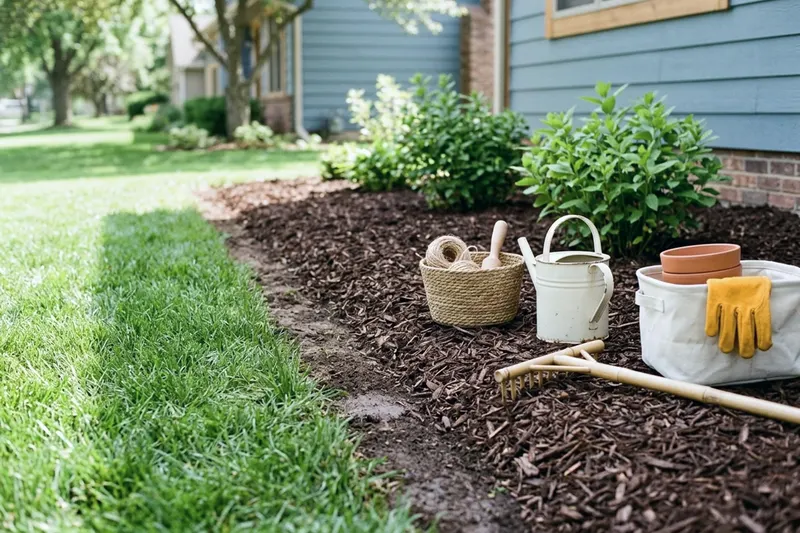
Clear a weed-filled bed faster instead of pulling them by hand with the right garden hoe and a few shallow strokes along the soil surface.
Weeding beds with a garden hoe instead of by hand
Written up by Linnea Thorsby
6 minutes to read

Trading your hand trowel for a garden hoe lets you clear a bed of young weeds while standing up. Slicing through stems right at the soil line leaves the roots in the ground. This simple motion stops you from turning over clumps of dirt that hide dormant weed seeds.
Why slicing tiny weeds beats pulling big ones
Pulling a mature weed by the base often drags a clump of soil up along with the deep roots. That disruption exposes buried weed seeds to sunlight and oxygen so they can sprout a new crop across the open dirt. Taking a hoe to the bed breaks that cycle by slicing the top of the plant away from its root system.
A severed annual weed usually dies without its leaves to gather sunlight. Perennial weeds take longer to kill, but they weaken after you slice off their newly emerged green shoots repeatedly. The metal blade slides just under the surface to leave the deeper soil layers largely undisturbed.
Working from a standing upright position also lets you clear a wide swath of ground with a single sweeping motion. You spare your knees the ache of crawling through the dirt to pinch out individual sprouts. You can read about natural ways to keep weeds down to combine hoeing with a thick layer of ground cover.
Stirrup and scuffle hoes for slicing between plants
A stirrup hoe features a swiveling metal loop attached to the end of a long wooden handle. The double-edged blade rocks back and forth to cut through plant stems on both the push and the pull stroke. Cornell University calls stirrup hoes ideal for shallow weeding.
A scuffle hoe works the same way but uses a fixed diamond or triangular blade that pushes forward into the loose soil. Both of these tools excel at skimming flat surfaces and slipping into the narrow gaps between your delicate perennials. The horizontal cutting action helps limit root damage, but cultivation can still harm shallow-rooted plants, so work gently near them.
Maneuvering the narrow head around fragile stalks takes a few minutes of practice to master. Once you find a comfortable grip on the long wooden handle, you can quickly carve tight circles around the base of your shrubs.
Chopping hoes for rough corners, not loose beds
A traditional chopping hoe has a wide, heavy metal blade fixed at a sharp right angle to the wooden handle. You swing the heavy head downward to chop into the earth and pull the loose material toward your body. Cornell University says traditional chopping hoes tend to dig too deep in loose soil and bring up more weed seeds.
That deep gouging action makes a standard chopping hoe the wrong choice for a soft garden bed or a carefully tended flower border. The thick forged steel blade is better suited for breaking up hard, compacted dirt in an empty lot. You can also use a heavy blade to hack through thick vines on a rough and overgrown fence line.
Keep a heavy chopping hoe in the shed for shaping garden trenches and clearing out heavy brush. Stick to a lightweight stirrup hoe for your weekly garden maintenance among the fragile flowers.
Hoe on a dry, sunny day so cut weeds wither
The weather and soil conditions determine how quickly your cut weeds dry out and die on the ground. Cornell University says hoeing is best done when the soil is slightly dry and the weather is warm and sunny. Slicing through wet dirt often clumps thick mud around your metal blade and makes the tool much heavier to push.
Weeds cut during damp or rainy weather can also sprout fresh roots if the soil stays moist. Dragging your tool through dry soil leaves a clean, flat surface and drops the severed plants onto the warm ground to dehydrate.
Cut stems and leaves dry out and turn brittle in the sun. You rarely have to rake up the tiny withered scraps or haul heavy loads of pulled weeds to the backyard compost bin. The dry remains simply break down into the soil to feed your garden over the summer.
Skim the top inch of soil instead of digging
Your goal is to sever the thin weed stems without turning over the layers of dirt underneath them. Cornell University says very shallow soil disturbance of about 1 inch can eliminate a large percentage of weeds, while deeper disturbance brings more seeds to the surface to sprout. Keep the blade within about 1 inch of the surface, just deep enough to catch the plant crown.
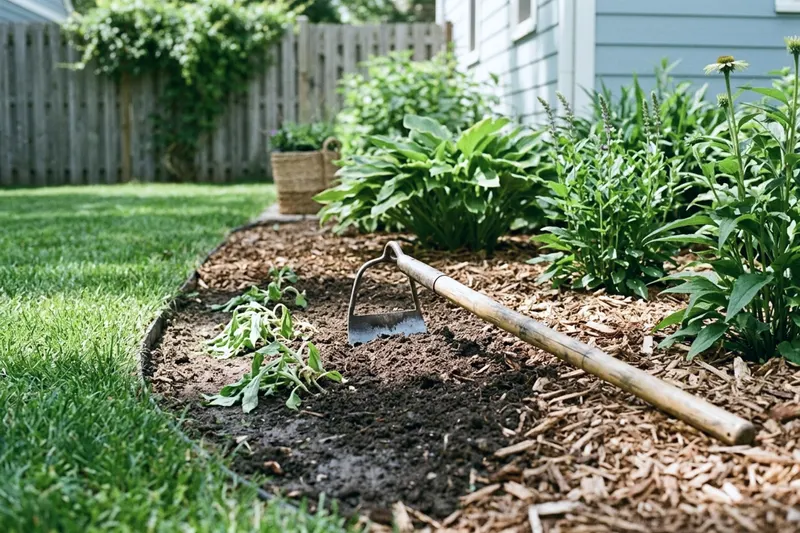
The crown sits right at the soil line where the green stems meet the white roots. UC IPM recommends shallow cultivation or hoeing to remove annual weeds from ornamental plantings, though cultivation can damage ornamentals with shallow roots. Press the tool lightly against the dirt and push it forward so it glides smoothly just below the dusty surface.
Digging the tool down at a steep angle can churn the flower bed and drag hidden seeds into the light. Keep the wooden handle low to the ground so the metal blade slices horizontally across the bed.
Once you finish slicing through a row of unwanted weeds, cover the freshly cleared ground to block the light. You can add organic mulch that keeps weeds down over the bare soil to smother any remaining seeds.
Go over the beds often while weeds are still seedlings
Garden hoeing works best as a light maintenance task rather than an emergency rescue operation for an overgrown yard. Cornell University says hoeing works best when weeds are very small seedlings or newly emerged shoots of perennial weeds. Small seedlings have incredibly shallow roots that offer practically no resistance to a sharp metal blade.
Waiting until the weeds grow tall forces you to hack at thick woody stems that can bend or blunt your tool. Walk your beds often during the active growing season to slice away the green sprouts before they establish a firm hold. Spotting the first sets of tiny leaves early saves you heavy labor later in the summer.
This light habit fits perfectly into low-maintenance garden ideas because a light pass takes only a few minutes.
Keep the blade sharp with a few strokes of a file
A dull metal blade crushes plant stems instead of cutting them and forces you to push much harder against the dirt. You can restore the blade edge on most steel garden tools with a flat bastard mill file. Put on a pair of heavy leather work gloves to protect your knuckles from the sharp edge.
Secure the long wooden handle of the tool against a solid work bench or a sturdy wooden fence post. Holding the handle steady stops the metal head from wobbling while you apply pressure with the file. Hold the file at the exact same angle as the factory bevel on the edge of the blade.
Push the file forward across the metal in a single smooth stroke, pushing away from your body. Lift the file completely away from the blade to reset your hands for the next forward pass. Dragging the metal file back and forth across the sharp edge can damage the file.
A few solid strokes along the entire length of the blade can strip away the surface rust and restore a clean edge. Wipe the freshly sharpened metal with an oiled rag to protect it from morning dew until your next trip into the yard.