Clear the pile of sneakers and boots by setting strict limits and choosing narrow entryway shoe storage that keeps your front door wide open.
7 ways to stop shoes piling up by the front door
Written up by Lyle Muncy
6 minutes to read

A heap of sneakers and work boots blocks the front door and makes it hard to open. You can clear the path by choosing narrow entryway shoe storage that holds the pairs you wear every day. Setting a hard limit on what stays by the door stops the pile from growing back.
1. Set a two pair limit per person at the door
Start by counting the pairs that land by the door on a normal afternoon. Establish a rule that each person keeps exactly two pairs by the door. One pair of everyday sneakers and one pair of seasonal boots cover most daily errands.
Moving the rest of the footwear out of the entry opens up the floor. Tell everyone in the house to pick their two primary pairs. Any extra running shoes, dress shoes and sandals must find a different home.
Keep the two pair limit strict for family members. When guests arrive, they can place their shoes neatly on the floor next to your main storage unit. Once they leave, the floor returns to normal.
2. Measure the depth you can spare before you buy anything
Many homes lack a dedicated foyer and the front door simply opens straight into the living room. Look at the wall space directly behind the door or along the nearest wall. Grab a tape measure and find out exactly how much depth you can spare.
Look at your baseboards and shoe molding before you shop. Baseboards stick out from the wall and push your cabinet forward, so measure from the front of the baseboard rather than the flat wall to get a true depth. Account for the swing radius of your front door. If the door handle crashes into your new wooden cabinet, you will dent both pieces.
Mark the depth on the floor with a piece of painter's tape. Walk past the tape a few times to see if your shoulder brushes the wall. You need a clear walking path past the storage unit so you can move comfortably.
3. Use a shallow tilt out cabinet in a narrow entry
An entryway cabinet with shoe storage keeps the mess hidden behind closed doors. When you only have a sliver of depth available, a tilt out cabinet fits perfectly. These units feature drawers that pivot outward on a hinge so the shoes slide in toes down.
A tall cabinet with three tilt out drawers holds multiple pairs of adult shoes. Anchor the cabinet to the wall with the maker's anti-tip hardware and instructions, because narrow units can tip when a heavy drawer opens. A closed cabinet provides a flat top surface for a catchall tray to hold your keys. You can also attach a heavy hook to the side so your purses stop slumping on the floor.
Shoes trapped in a closed box generate odors. Look for a tilt out cabinet with small ventilation holes in the back panel. The holes let air circulate and dry out damp soles. Wipe the inside of the plastic tilt drawers with a damp rag every few months to remove loose dirt.
4. Give kids open cubbies they can reach without help
Children struggle with cabinet doors and often dump their sneakers on the floor instead of putting them away. A shoe cubby storage bench solves this by leaving the targets open and visible. Buy a wooden bench with square cubbies. A bench provides a spot to sit and tie laces while keeping the footwear organized.
Assign two specific cubbies to each child, using a simple label with their name to stop fights over space. Open cubbies work best for kids because they only have to push the shoe directly into the slot. Do not put soaking wet shoes into wooden cubbies or the wood veneer may peel and bubble. Instruct your kids to leave wet rain boots on a waterproof mat until they dry.
Sand and dried mud will accumulate inside the dry cubbies. Vacuum the slots out once a month with a brush attachment to stop dirt spilling onto the main floor.
5. Add a boot tray for wet and snowy months
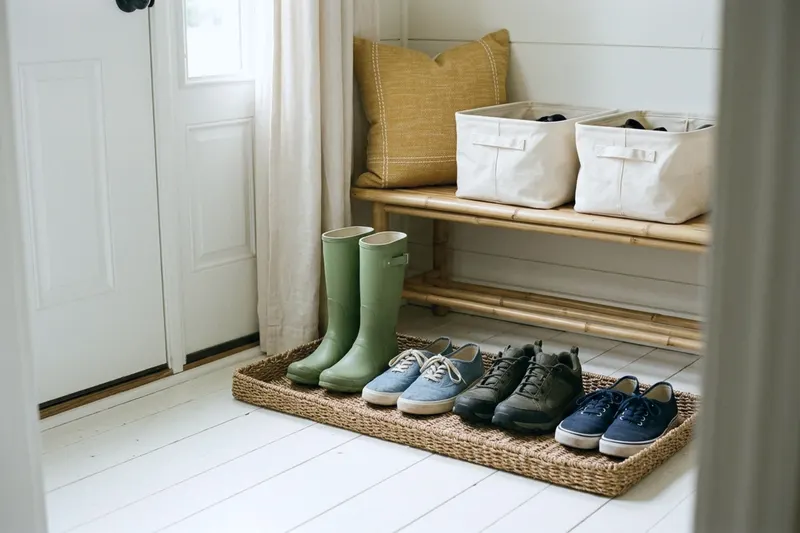
Winter boots and rainy spring days demand a place for wet footwear to drain. Wood cabinets and fabric bins can warp and mold when exposed to standing water. Buy a heavy rubber or rigid plastic boot tray with a raised lip. A standard tray holds a few pairs of bulky winter boots.
Place the tray directly on the floor next to your main storage cabinet. Tuck the boot tray under a floating bench or in a corner where you will not trip over it in the dark. A tray full of wet boots acts as a tripping hazard if left dead center in the hallway.
The raised lip traps melting snow and prevents water from soaking into your hardwood floors or carpet. Wash the tray out in the bathtub with warm water and dish soap every few weeks. You can fill the bottom of the tray with river rocks to lift the boots out of the puddles and let the soles dry faster.
6. Put doormats outside and inside so less dirt comes in
Shoes carry more than just mud and water into your living space. The EPA says lead in soil can be tracked into homes on shoes, clothes, pets or other objects. Set up a two-step mat system to catch debris by placing a rough scraper mat immediately outside the front door to pull off heavy mud. Shake this heavy outdoor mat out over the grass once a week.
The EPA advises placing doormats both outside and inside all entryways and removing your shoes before entering the home. Lay a soft washable fabric mat just inside the door to absorb moisture and fine dust. This routine can help cut down on soil carried into the home. Wash the indoor fabric mat in your washing machine on a cold cycle if the care label allows.
If your work or hobbies might leave lead dust on your shoes, the EPA advises leaving shoes outside your home if they might carry lead dust from work or hobbies.
7. Send extra pairs back to closets every weekend
A two pair limit only works if you enforce it constantly. Shoes multiply by the front door over the course of a busy week as people grab different pairs for the gym or the yard. Pick a specific time every weekend to reset the entry. Sunday afternoon is a good time to pick up the strays and carry them back to the bedrooms.
Make each person responsible for retrieving their extra pairs. Give them a tote bag to carry their extra boots and running shoes to their rooms. Once you return the extras, you will need a place to put them. You can find out which shoe rack fits a closet floor to handle the overflow.
Wiping the entry floor down after the reset is quick and gives you a clean start for Monday. Establish a routine of checking the entry every Sunday evening. A walk through the house puts the excess pairs back where they belong.
How to manage tall boots and bulky footwear
Riding boots and tall winter boots often do not fit in standard shoe cubbies or shallow cabinets, so you must find a different solution for footwear that rises above the ankle. Buy a few plastic boot shapers to keep the shafts upright. Slumping boots take up more floor space and block the walking path. Set a tall wooden crate next to your cabinet to hold long boots upright.
You can also lay tall boots flat in a large woven basket. A basket hides the bulky boots and keeps them contained in one footprint. Store out of season boots in a plastic bin under your bed to free up valuable floor space in the entry.


