Empty your crowded front hall and establish a simple coat closet organization routine to keep outerwear, boots and accessories ready for any weather.
What belongs in the coat closet and what should go elsewhere
Written up by Lyle Muncy
6 minutes to read

A coat closet works best when it only holds the outerwear you need for the weather outside. You fix a jammed front hall closet by separating the daily coats from the deep winter gear. Moving household clutter elsewhere frees up space for guests and makes your morning exit smooth.
Empty the space and count coats per person
Open the closet door and pull every single item out into the hallway. You cannot make good decisions while hangers are wedged together and sleeves are tangled. Lay the coats across a nearby bed or a sofa so you can see exactly what you own.
Group the pile by person and then by season to reveal the duplicates. A family often accumulates multiple black jackets, torn windbreakers and heavy wool overcoats over time. Ask each person to pick their favorite everyday jacket and their heavy winter coat for the season.
Keep the everyday items that fit well and feature working zippers. Put the coats that nobody wears into a heavy-duty trash bag for a local thrift store. Toss any torn or stained jackets directly into the household trash, as thrift stores may not accept broken clothing.
Limiting each person to a daily jacket and a heavy coat prevents the closet rod from bowing under the weight. A crowded rod wrinkles your clothes and makes it hard to grab a coat in a rush.
Relocate the off season outerwear
Your front closet only needs to hold the clothes that match the temperature outside. A heavy down parka does nothing for you in a warm spring rain. Keeping out of season gear by the front door just causes frustration when you look for a light sweater.
Move the thick winter coats to a bedroom closet or a basement wardrobe during the warm months. Use breathable cotton garment bags to help protect heavy wool coats from dust. The bags keep the heavy coats safe and out of your way until the first frost hits.
Pack lightweight summer raincoats into a large plastic tote when the snow starts falling. Slide that tote under a bed or place it on a high shelf in a guest room. Swap the seasonal bins and garment bags as the weather turns to keep the front hall clear.
Moving the off season gear away from the front door cuts the load on the closet rod. You gain breathing room for the bulky items you actually need to wear. Your packed closet finds relief when you enforce a strict seasonal rotation.
Store hats and gloves in a reach height bin
Loose accessories form a messy pile on the top shelf and fall on your head when you open the door. You need a dedicated spot to corral the matching gloves, knit beanies and thick wool scarves. Leaving these small items loose on a shelf invites a lost glove.
Place a small canvas bin or a clear plastic tub on a shelf at chest height. A reachable bin lets you drop your gloves straight into the container as you walk through the front door. You avoid leaving a trail of wet wool across the living room furniture.
Assign a small wire basket to each family member if you have the shelf space. Separate baskets keep each person's mittens from getting mixed up. Label the front of each basket with a piece of tape and a permanent marker to keep things clear.
Keep only the accessories you wear on a weekly basis in these bins. Move the specialty ski goggles and extreme weather gear to a bedroom drawer until you plan a mountain trip.
Assign rod space for guests and hooks for family
Family members often skip the step of putting a jacket back on a wooden hanger. A coat draped over a dining chair often belongs to someone who hates dealing with a crowded closet rod. You can solve this habit by changing how you hang the daily coats.
Install a sturdy row of metal hooks on the wall outside the closet or on the door inside. Assign a hook to each person in the house for their daily jacket. Hooks require no effort and keep the most used items off the floor.
Leave the main closet rod entirely empty for heavy winter coats and guest outerwear. A row of empty wooden hangers looks welcoming when a visitor walks into your home. You save guests the awkward trouble of searching for a spot to wedge their belongings among your personal items.
Consistent wooden hangers make the remaining coats look neat and purposeful. Throw away the flimsy wire hangers you get from the dry cleaner. A heavy coat usually hangs straighter on a thick wooden hanger.
Arrange boots on the floor and bags up high
The bottom of the closet often becomes a dark trap for muddy boots, discarded mail and broken umbrellas. You have to claim the floor space back for the heavy footwear that ruins your rugs. Leaving shoes in a heap makes the entire entry look messy.
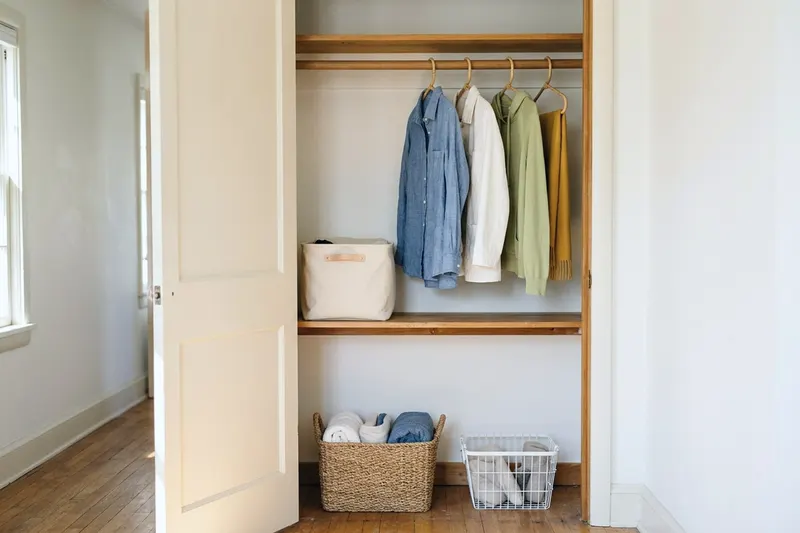
Place a wide hard plastic boot tray directly on the closet floor. A tray with a raised lip catches the melting snow and dripping rainwater before it ruins the baseboards. You can take the plastic tray outside and hose it off when the dirt builds up.
Give each person enough room on the tray for a daily pair of shoes or boots. When too much footwear clutters the hall, learn how to stop shoes piling up by moving the excess pairs to a bedroom.
Use the highest shelf in the closet for your structured tote bags and heavy backpacks. Empty out the heavy bags before you place them on the top shelf to avoid straining the wood. If you struggle with purses slumping in a pile, line them up shoulder to shoulder so they support each other.
Clear everything else off the floor so you can run a vacuum straight into the corners. A bare floor with a single boot tray leaves pests fewer places to hide.
Remove cleaning supplies and household overflow
A front hall closet is a prime target for random household objects that have no dedicated home. People often shove the vacuum cleaner, folding chairs and cardboard boxes into the front hall to hide them. This habit ruins the function of a coat closet.
Take the upright vacuum cleaner to a utility room or park it in the corner of a laundry space. The vacuum eats up massive amounts of floor space that you need for muddy boots. Moving the cleaning supplies lets you treat the coat closet as a place for coats.
Sort through the stray tennis rackets, board games and rolls of holiday gift wrap. Carry the sports equipment to the garage and slide the wrapping paper under a bed. Your front hall is the entry point to your home and should not serve as a long-term storage unit.
You might find boxes of lightbulbs, batteries and extension cords taking over the shelves. Move these utility items to a garage shelf or a sturdy plastic tote in the basement. You want the closet shelves totally clear for hats, bags and scarves.
Review the closet at the start of cold weather
A perfectly arranged coat closet will eventually drift back into a cluttered mess without a little maintenance. Seasons change, kids grow out of their jackets and new umbrellas replace broken ones. You need a regular rhythm to keep the space functional and ready for a storm.
Check the front hall closet on the first chilly weekend of the fall. Pull out the light jackets and move the heavy winter coats back to the main rod. This seasonal swap gives you an excuse to inspect the space and remove the clutter that gathered over the summer.
Try on the winter coats to make sure the zippers still catch and the pockets hold together. Kids often grow out of a snowsuit between seasons. Catching the sizing problems early gives you time to buy replacements before a blizzard hits your town.
Wipe down the shelves with a damp cloth and wash the boot tray while the closet is empty. A quick clean removes the dry mud and dust that settled over the warm months.


